Commercial solar in the United States: how a business plant pays in 2026, state by state
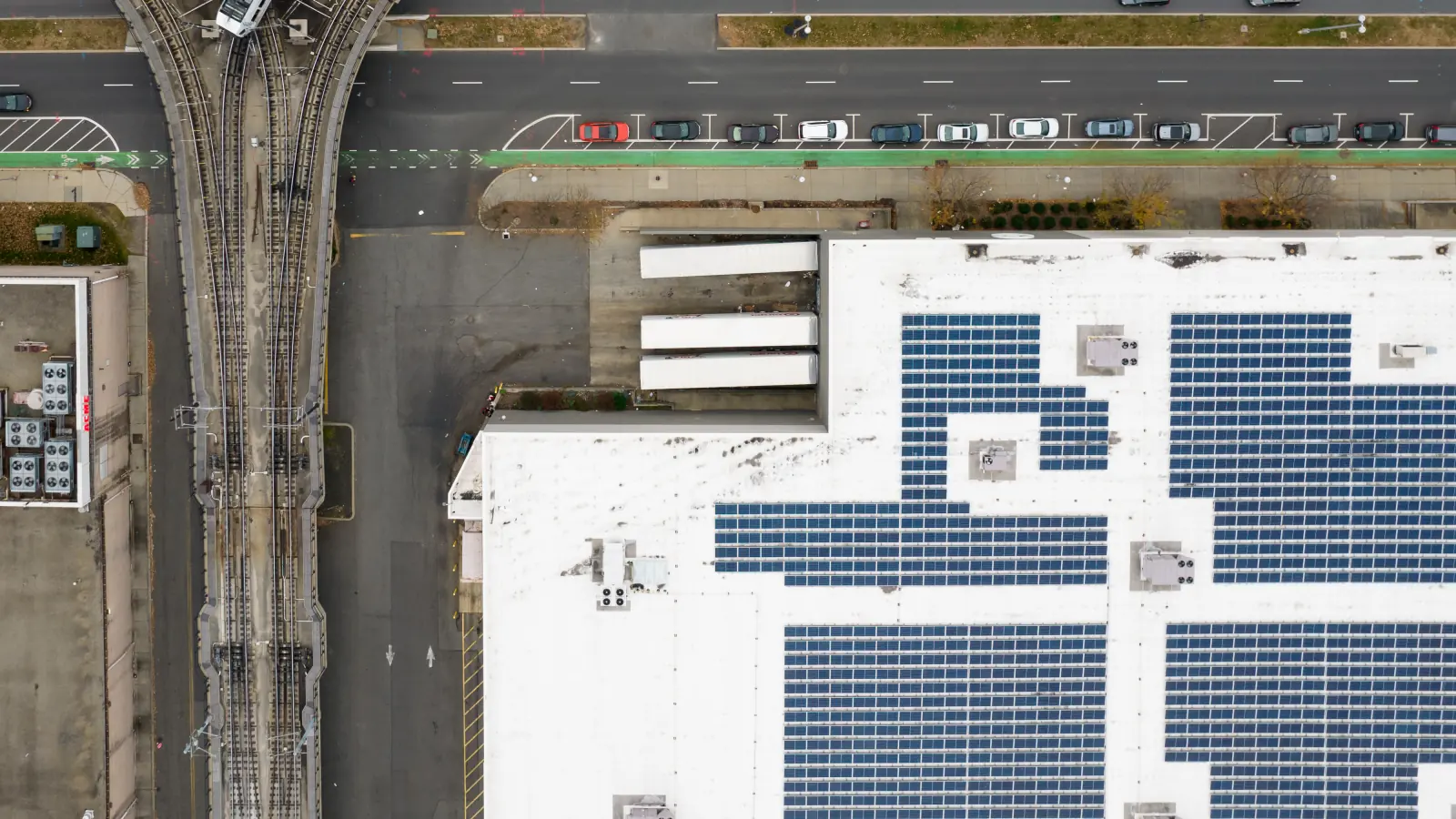

A solar plant at a business pays mainly by cutting the power bought from the utility, so it is worth most where power is expensive and the site uses its output. In August 2026, US businesses paid 14.47 cents per kWh on average, 8.96 cents in Texas and 30.02 cents in California, says the Energy Information Administration (EIA). Export rules, federal tax and state law shape the rest.
In short
- A business plant pays mostly by replacing power bought from the utility, so its value follows local prices and how much output the site uses.
- Federal tax rules are the same everywhere, while export payments, third-party ownership, incentives and property tax change from state to state.
- Check your utility’s export rules, whether your state allows a power purchase agreement (PPA), and the 2027 credit deadline for new solar.
How does a solar plant save a business money?
Most of the value comes from power your business no longer buys. Each kWh the plant produces while your site is using power replaces a kWh from the utility, so it saves what you would have paid for that energy. A plant is therefore worth most where power is expensive and where the site uses power in daylight, such as a factory on day shifts, a cold store or an office.
Power the plant sends to the grid, when the site needs less than it produces, is paid under rules set by each state and utility. It can be worth less than power used on site, as explained below.
Many business tariffs also include a demand charge. The National Renewable Energy Laboratory (NREL) explains that it is usually based on the highest average use in a 15-minute interval during the billing period. Solar can lower it, but a few clouds at the wrong moment can wipe out most of that saving for the whole billing period. A battery can cut demand more reliably, and solar and storage often work best together.
| Where the kWh goes | What it is worth | What to check |
|---|---|---|
| Used on site as it is produced | The energy charge you would otherwise pay your utility for it | How much power the site uses in daylight |
| Sent to the grid | What your state’s export rules pay: the retail rate under net metering, a credit that can be lower under net billing | Your utility’s export rules, before the plant is sized |
| Stored in a battery and used later | The energy charge at the time of use, plus any cut in demand charges | Your demand charge and when the site’s peaks happen |
How much do businesses pay for electricity in each state?
The price you pay sets the value of each kWh you no longer buy. The table shows EIA’s average price of electricity for commercial customers in August 2026, the latest month published as of November 17, 2026, against August 2025.
Across the 50 states and DC, the August 2026 average ran from 8.07 cents per kWh in North Dakota to 43.55 cents in Hawaii, and it was higher than a year earlier in 46 of them (our calculation from EIA data). The US average rose 4.3 percent, from 13.87 to 14.47 cents.
These are averages, not tariffs. EIA divides what customers paid, including demand charges, customer charges and taxes paid by the utility, by the kWh they bought. A kWh from your plant saves the energy part of your own tariff, which can be lower than the average where demand charges are high, so work from your own bills.
| State | August 2026 (¢/kWh) | August 2025 (¢/kWh) | Change |
|---|---|---|---|
| Hawaii | 43.55 | 34.93 | +24.7% |
| California | 30.02 | 29.24 | +2.7% |
| Massachusetts | 24.11 | 23.15 | +4.1% |
| New York | 23.06 | 22.33 | +3.3% |
| New Jersey | 18.71 | 18.52 | +1.0% |
| Illinois | 14.67 | 13.94 | +5.2% |
| US average | 14.47 | 13.87 | +4.3% |
| Pennsylvania | 13.93 | 12.68 | +9.9% |
| Georgia | 13.81 | 11.16 | +23.7% |
| Arizona | 13.05 | 12.98 | +0.5% |
| Ohio | 12.31 | 11.42 | +7.8% |
| Florida | 11.35 | 11.43 | -0.7% |
| North Carolina | 10.73 | 10.02 | +7.1% |
| Nevada | 9.80 | 10.05 | -2.5% |
| Texas | 8.96 | 8.76 | +2.3% |
Utilities may class business customers as commercial by their activity or by their demand, so the commercial sector is not exactly the same in every state. EIA’s next release is due on November 24, 2026.
What are you paid for power you send to the grid?
Each state, and sometimes each utility, decides what exports are worth. Under net metering, exports earn bill credits at the retail rate you pay for power. Under net billing, they earn credits at a rate meant to reflect their value to the grid, which can be lower than the retail rate.
DSIRE, the database of state energy policies run by the NC Clean Energy Technology Center at North Carolina State University, maps these rules for customers of investor-owned utilities. Its map of November 2026 shows net metering offered in 27 states and DC, net billing or another form of credit in 16 states, and no compensation in one. The map does not cover municipal utilities or cooperatives, so if one serves your site, ask it which rules apply.
Two examples. In California, new customers of the three large investor-owned utilities have been on net billing since April 15, 2023, and the state commission says their export credits are usually lower than the retail rate, as solar PPAs for businesses in California explains. In the Texas market run by the Electric Reliability Council of Texas (ERCOT), DSIRE notes that what you are paid for exports is up to your retail electric provider.
So the more of the output your site uses itself, the less the export rules matter. Before a plant is sized, ask your utility, or your retail provider in Texas, which export rules would apply and whether they are about to change.
Which federal tax rules apply to a business plant in 2026?
Federal rules are the same in every state. The clean electricity investment credit, Section 48E of the tax code, goes to the plant’s owner: your business if it buys, otherwise the provider of a power purchase agreement (PPA) or the leasing company, which may elect to pass it to you. The IRS sets it at 6 percent of the qualifying investment, or 30 percent for a plant under 1 megawatt (AC) or one that meets prevailing wage and apprenticeship rules, with possible bonuses on top. For a solar plant whose construction starts now, it can be claimed only if the plant is in service by December 31, 2027; batteries are not bound by that date. The deadlines and the foreign-entity rules are set out in the US solar tax credit in 2026.
A business that owns its plant also recovers the cost through depreciation. IRS Publication 946 treats property that qualifies for the 48E credit, energy storage included, placed in service after 2024, as 5-year property under the modified accelerated cost recovery system (MACRS). It also notes that the 2025 tax law, Public Law 119-21, removed solar from an older 5-year category for plants whose construction began after 2024. So ask your CPA which class applies to your plant, especially if it would not qualify for the credit.
The same law made permanent a 100 percent special depreciation allowance, often called bonus depreciation, for qualified property acquired and placed in service after January 19, 2025. It applies unless you elect out, and qualified property includes equipment depreciated under MACRS over 20 years or less.
If your business claims the credit, the plant’s depreciable basis is reduced by half the credit, under section 50(c) of the tax code. With a 30 percent credit, that leaves 85 percent of the cost to depreciate (our calculation). If you take a PPA instead, what your business can deduct is covered in tax benefits of a solar PPA.
A summary as of November 17, 2026, not tax advice. Confirm the credit, the depreciation class and the special allowance for your own plant with a CPA or tax adviser.
What else changes from one state to the next?
Who may sell you power. With a PPA, a company owns a plant at your site and sells you its output, but some states let only utilities sell electricity to the public. DSIRE’s map of May 2026 shows third-party PPAs authorized or in use in at least 29 states and DC, apparently disallowed in six and unclear in the rest. Third-party solar PPAs by state sets out the groups and the options where a PPA is not possible.
Connecting to the grid. Your utility must approve the plant’s connection, under rules that differ from state to state. In California, for example, the California Public Utilities Commission (CPUC) sets them in Electric Rule 21, and each investor-owned utility runs its own version. Ask who files the application, how long your utility usually takes and who pays if it asks for grid upgrades.
Incentives. State and utility programs open, close and change their budgets, and DSIRE lists them state by state. Each program decides who qualifies and on what terms, so check that it is open, and what it requires, before you count on it.
Property tax. A plant can raise a building’s assessed value, and states treat that differently. Two examples:
- California: the exclusion of new solar systems from property tax reassessment becomes inoperative on January 1, 2027. Systems already excluded stay excluded until the property changes ownership, says the State Board of Equalization.
- New York: real property with a solar energy system built before January 1, 2030 can be exempt for 15 years from tax on the increase in assessed value the system brings. Counties, cities, towns, villages and most school districts may choose to disallow it, so ask your assessor.
How can a business pay for a plant?
The plant can be the same whichever way you pay. What changes is who owns it, who claims the tax benefits and who carries the risk if it produces less than expected.
If you buy, your business owns the plant and pays for it from its own funds or a loan. If you lease, a leasing company owns it and you pay a set amount each period; the IRS lets a lessor elect to pass the investment credit to the lessee, and a lessee generally cannot depreciate leased property. With a PPA, a company owns, operates and maintains the plant and you pay for each kWh it produces, at a price set in the contract, with any yearly increase written into the contract from the start. How a PPA works is explained in what is a PPA?.
Commercial property assessed clean energy (C-PACE) is another way to finance a purchase. It lets a building owner pay for energy upgrades, renewable energy included, through a special assessment on the property, usually billed as a separate charge with the property tax. It needs a state law and a local program: in February 2022 the US Department of Energy counted more than 37 states and DC with enabling laws. Ask your county or city whether a program runs where your site is.
| What differs | Buy | Lease | PPA |
|---|---|---|---|
| Who owns the plant | Your business | The leasing company | The provider or its financing partner |
| What you pay | The plant and its upkeep, from your funds, a loan or C-PACE | A set amount each period | Each kWh the plant produces, at the contract price |
| Federal credit (Section 48E) | Yours, if the plant qualifies | The lessor’s, unless it elects to pass it to you | The owner’s |
| Depreciation | Yours | The lessor’s | The owner’s |
| If output falls short | You save less | You pay the same | You pay for fewer kWh |
| State law | No sale of power is involved | Allowed in some states that bar third-party PPAs | Allowed only where state law permits it |
Review the accounting and tax treatment of each option with a CPA or tax adviser before you sign.
Where can you read more about your state?
These guides go further on single states and topics:
- Solar PPAs for businesses in California: net billing, Rule 21 and what to check in a California contract.
- Commercial solar in Texas.
- Commercial solar in New York.
- Third-party solar PPAs by state: where a company may own a plant at your site and sell you its power.
- What is a PPA?: how power purchase agreements work and who they suit.
- The US solar tax credit in 2026: who can claim what, and the 2027 deadline for solar.
How Aeternus helps
Aeternus Power is an independent energy company based in Madrid. We originate, qualify, structure and finance energy projects, solar-led and with storage, and bring in the builders and financing partners for each one. We never own the plants. A commission is paid by whoever builds or finances the project, never by you, and only if the project goes ahead.
Our office in California opens on December 1, 2026. We have no office in any other state, and we cannot yet say which ways to pay we will arrange in the US, or when. If you tell us about your site, where it is, which utility serves it and how much power it uses in a year, we will say within two working days whether we can help there. How we work with businesses is on our business page.
Questions
Is commercial solar worth it in the US in 2026?
It depends on what you pay for power, how much of the plant’s output your site uses and your state’s export rules. In August 2026 businesses paid 8.96 cents per kWh on average in Texas and 30.02 cents in California (EIA), so the same plant saves very different amounts. Ask for a study built on your own bills and tariff.
Can a business still get the 30% solar tax credit in 2026?
A business that owns a qualifying plant can claim the Section 48E credit: 30 percent for a plant under 1 megawatt (AC) or one meeting the wage and apprenticeship rules, otherwise 6 percent, plus possible bonuses. For a solar plant whose construction starts now, it must be in service by December 31, 2027. The details are in the US solar tax credit in 2026.
Can I take bonus depreciation on a commercial solar plant in 2026?
Public Law 119-21 made permanent a 100 percent special depreciation allowance for qualified property acquired and placed in service after January 19, 2025, unless you elect out. If you also claim the credit, the basis you depreciate is reduced by half the credit. Confirm your case with a CPA or tax adviser.
Does every state have net metering for businesses?
No. DSIRE’s map of November 2026, which covers investor-owned utilities, shows net metering in 27 states and DC, net billing or another form of credit in 16 states and no compensation in one. It does not cover municipal utilities or cooperatives, so if one serves you, ask it.
Which states allow solar power purchase agreements?
DSIRE’s map of May 2026 shows third-party solar PPAs authorized or in use in at least 29 states and DC, and apparently disallowed in six, including Florida and North Carolina. Third-party solar PPAs by state lists them all.
What is C-PACE financing for solar?
Commercial property assessed clean energy lets a building owner finance energy upgrades, renewable energy included, and repay them through a special assessment on the property, usually billed with the property tax. It needs a state law and a local program, so ask your county or city whether one runs where your site is.
Sources
- EIA: Electric Power Monthly, Table 5.6.A, average price of electricity to ultimate customers by end-use sector and state, August 2026 and 2025 (released October 23, 2026): https://www.eia.gov/electricity/monthly/epm_table_grapher.php?t=epmt_5_6_a
- EIA: Electric Power Monthly, technical notes (how average prices are calculated and what revenue includes): https://www.eia.gov/electricity/monthly/pdf/technotes.pdf
- IRS: Clean Electricity Investment Credit, Section 48E (rates and bonus amounts; reviewed January 5, 2026): https://www.irs.gov/credits-deductions/clean-electricity-investment-credit
- IRS: Instructions for Form 3468 (2025), end date for wind and solar, plants under 1 MW and the lessor’s election (updated August 28, 2026): https://www.irs.gov/instructions/i3468
- IRS: Publication 946 (2025), How To Depreciate Property: 5-year property, special depreciation allowance and leased property (updated April 30, 2026): https://www.irs.gov/publications/p946
- Public Law 119-21 (July 4, 2025), sections 70301, 70509 and 70513 (GPO): https://www.govinfo.gov/content/pkg/PLAW-119publ21/html/PLAW-119publ21.htm
- 26 U.S. Code section 50(c): basis adjustment for the clean electricity investment credit (Legal Information Institute): https://www.law.cornell.edu/uscode/text/26/50
- CPUC: Net Energy Metering and Net Billing (net billing tariff since April 15, 2023): https://www.cpuc.ca.gov/industries-and-topics/electrical-energy/demand-side-management/customer-generation/net-energy-metering-and-net-billing
- CPUC: Electric Rule 21, generating facility interconnections: https://www.cpuc.ca.gov/rule21/
- California State Board of Equalization: Letter to Assessors 2026/034 (September 1, 2026), solar new construction exclusion inoperative from January 1, 2027: https://www.boe.ca.gov/proptaxes/pdf/lta26034.pdf
- New York State Department of Taxation and Finance: assessor manual, RPTL section 487, solar and other energy systems exemption (updated February 10, 2026): https://www.tax.ny.gov/research/property/assess/manuals/vol4/pt1/sec4_01/sec487.htm
- US Department of Energy: Commercial Property Assessed Clean Energy (C-PACE) toolkit overview (February 2022): https://www.energy.gov/sites/default/files/2022-02/c-pace_toolkit_overview.pdf
- Lawrence Berkeley National Laboratory: Commercial PACE Financing and the Special Assessment Process (June 2019): https://eta-publications.lbl.gov/sites/default/files/cpace-special-assessmentv3.pdf
- NREL and Clean Energy Group: Identifying Potential Markets for Behind-the-Meter Battery Energy Storage, a survey of US demand charges (August 2017): https://www.osti.gov/servlets/purl/1374803
- DSIRE, NC Clean Energy Technology Center: net metering for investor-owned utilities, map (November 2026): https://ncsolarcen-prod.s3.amazonaws.com/wp-content/uploads/2026/11/DSIRE_Net_Metering_Nov2026.pdf
- DSIRE, NC Clean Energy Technology Center: third-party solar PV power purchase agreement policies, map (May 2026): https://ncsolarcen-prod.s3.amazonaws.com/wp-content/uploads/2026/05/DSIRE_3rd-Party-PPA_May2026.pdf
Latest
Solar PPAs for businesses in California: how they work and what to check