What is a PPA? How power purchase agreements work, what they cost and who they suit
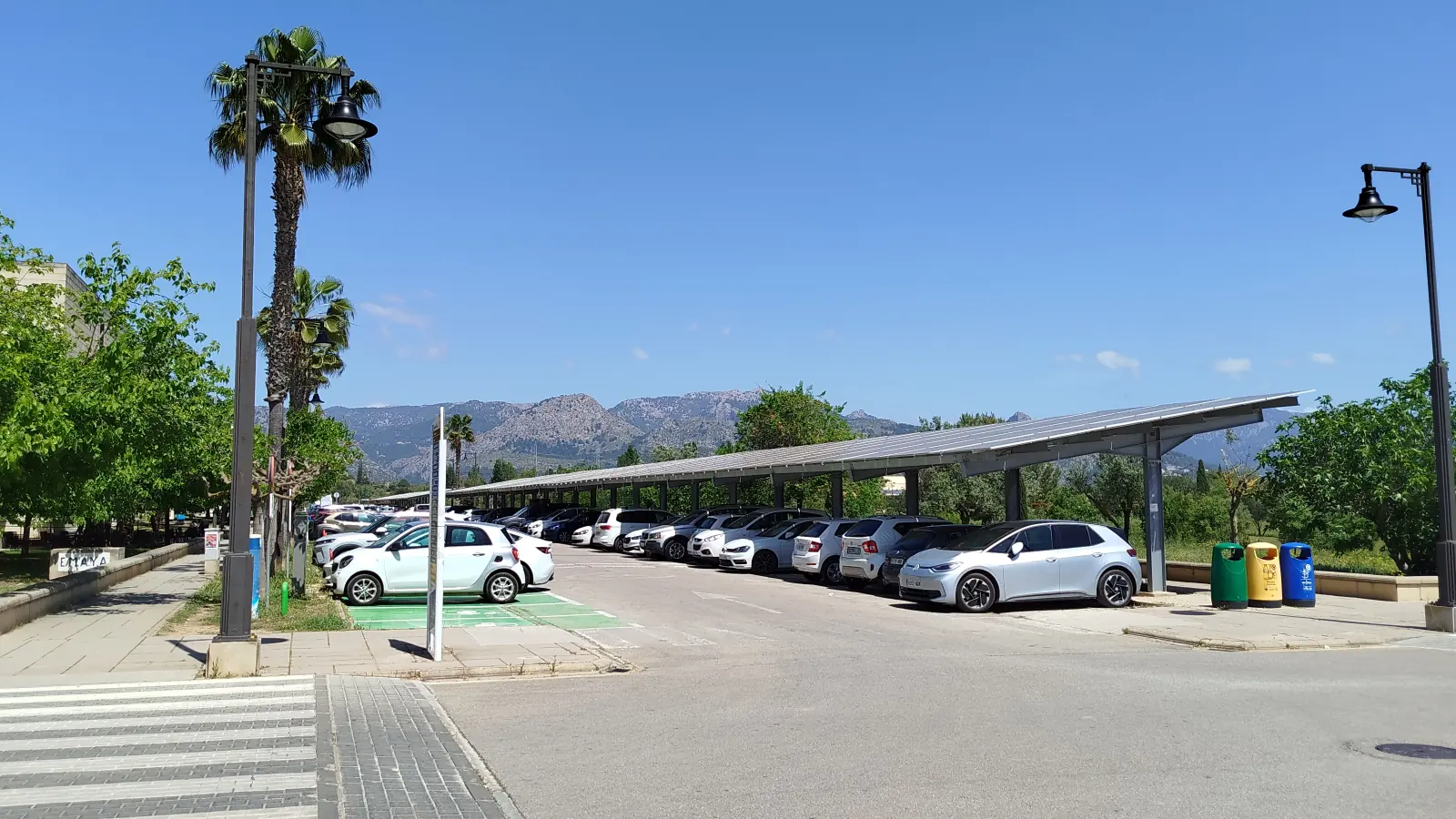

A power purchase agreement (PPA) is a long-term contract to buy electricity from a specific plant at a price per kWh set in the contract. With an on-site PPA, a provider builds, owns and runs a plant at your site, usually solar, and you pay only for the electricity it supplies, with no upfront investment.
How does a PPA work, step by step?
EU law defines a renewables PPA as a contract to buy renewable electricity directly from a producer, and lets a self-consumer’s plant be owned or run by a third party that follows the self-consumer’s instructions. That is the basis of an on-site PPA, which usually works like this:
- The provider studies your bills, your hourly consumption and your site, and proposes a plant size, a starting price per kWh and a term.
- It checks your company’s finances, because it recovers its investment from your payments over many years.
- You sign, and grant it the use of the space the plant needs, on a building, over a car park or on land, for the whole term.
- A builder installs the plant. The provider pays for it and owns it.
- A meter records the kWh the plant supplies to your site, and you pay for them at the contract price, usually monthly.
- At night, on cloudy days and whenever you need more, you keep buying from your usual supplier.
- At the end of the term you can usually buy the plant, extend the contract or have the plant removed.
On-site, off-site, physical, virtual and sleeved PPAs
PPAs differ in where the plant is and in whether its electricity actually reaches you. When a business talks about a solar PPA at its own site, it almost always means an on-site physical PPA. This page explains PPAs in any country; for how an on-site PPA works in one country, clause by clause, read solar PPAs in Spain.
- On-site: the plant is at your site, on a building, over the car park or on land next to it, connected to your own electrical installation.
- Off-site: the plant is elsewhere, often a large solar or wind farm, and its power reaches you through the grid. The US Environmental Protection Agency (EPA) notes that these deals are mostly open to large consumers with strong credit.
- Physical: you receive the electricity itself, on site or through the grid. The EPA says physical PPAs usually run 10 to 20 years.
- Virtual, or financial: no electricity changes hands. The plant sells its output on the wholesale market, you keep buying from your supplier, and the two sides settle the difference between the agreed price and the market price, usually monthly. The buyer usually receives the plant’s renewable energy certificates.
- Sleeved: a licensed supplier stands in the middle, buying the plant’s output, selling it on to you and handling the metering and billing.
How is the price set, and what do you pay?
You pay a price per kWh set in the contract, which normally starts below what the business pays the grid when it signs. Any yearly increase is written into the contract from the start, as a set percentage or linked to inflation. For home PPAs, California’s energy regulator, the CPUC, says these increases are typically 1% to 3% a year.
Increases add up: at 2% a year, the price in year 15 is almost 32% higher than in year 1, by our calculation. The price is predictable, but it does not stay the same, and nobody knows what grid power will cost in ten years.
A bigger plant, a longer term and solid finances tend to lower the starting price. In a project we are studying, an agri-food business in Castilla-La Mancha that pays the grid about €0.15 per kWh would pay about €0.11 per kWh with a PPA.
What a PPA does and does not cost you:
- No upfront investment: the provider pays for the plant.
- Maintenance, repairs and insurance are the owner’s, as the contract sets out.
- If the plant produces less, you pay less, because you pay per kWh.
- You still buy the rest of your electricity from your supplier.
- Watch for other costs: a minimum purchase, guarantees or deposits, and the cost of ending early.
Who is a PPA for?
With Aeternus, a PPA starts at 50 kWp; below that, you can buy or lease the plant at any size. A PPA fits less well if you may move soon, if the building needs major work or if your daytime use will fall sharply, although each of these can be handled in the contract, at a cost. It suits a business or an organisation that:
- uses a steady amount of power in daylight hours on most days;
- can use the plant’s space for the whole term, as owner or with the owner’s written consent;
- expects to stay at the site for most of the term, which usually runs 10 to 25 years;
- would rather keep its capital for its own business than tie it up in a plant;
- has finances the provider can rely on for that long.
PPA, buying or leasing: what changes?
The plant can be identical; what changes is who invests, who owns it and who carries the risk. If your company can invest, buying usually saves more over the plant’s life, because you pay no third party’s return. A PPA moves the investment and the technical risk to the owner.
Tax and accounting, in brief: tax incentives such as depreciation or tax credits go to the plant’s owner, which under a PPA is the provider, and the EPA notes that owners can pass tax credit savings on through a lower price. How a PPA shows in your accounts depends on its terms, so ask your auditor before signing. Read more in solar PPA tax benefits and, for buying a plant in Spain, solar tax incentives in Spain. Confirm any tax point with your tax adviser.
| Question | Buy | Lease | PPA (from 50 kWp with Aeternus) |
|---|---|---|---|
| Who invests | You, from your own funds or a loan | The leasing company; you pay little or nothing upfront | The provider; you pay nothing upfront |
| Who owns the plant | You | The leasing company | The provider |
| Who maintains and insures it | You | Often the leasing company, as the contract sets out | The provider |
| Who gets the tax incentives | You, where the law allows | Depends on the contract and the country | The provider, which can reflect them in the price |
| Price risk | Your cost is known once the plant is built; your saving moves with grid prices | Your instalment is set by the contract; your saving moves with grid prices and output | The price follows the contract’s formula; if grid prices fall a lot, a kWh from the plant can cost more than one from the grid |
| Typical term | The plant’s whole life | Set by the contract | Usually 10 to 25 years |
What happens at the end of a PPA?
Settle the end of the contract on day one, because there is little room to negotiate later. Ask how the plant’s condition will be checked before any purchase, which warranties pass to you and who pays for removal.
If you sell the building or move early, the usual ways out are to pass the PPA to the buyer or the new tenant, to buy the plant early or to pay the agreed exit cost. For homes, California’s regulator names two of these: transferring the contract to the new owner or paying the provider the rest of its value. At the end of the term, you can usually:
- buy the plant, at a price or by a formula set in the contract; the EPA notes that many on-site PPAs offer a purchase at fair market value, but a known figure is easier to plan around;
- extend the contract, at the price or by the formula set for the extension;
- have the plant removed and the site restored, at the cost of whoever the contract names.
PPAs country by country
In the European Union, the 2018 renewable energy directive lets a self-consumer’s plant belong to a third party, and each country sets its own rules on top. This is where things stand, as of 16 November 2026.
Spain: Royal Decree 244/2019 lets the consumer and the plant’s owner be different people or companies. Law 24/2013 exempts self-consumed renewable power from all tolls and charges, and provides for bilateral contracts directly between consumers and producers. Since March 2026, a solar or wind plant of up to 5 MW can also supply self-consumers through the grid from less than 5,000 metres away. See solar PPAs in Spain.
Portugal: self-consumption follows Decree-Law 15/2022. Since 1 July 2026, Law 29/2026 has regulated the CAER, a written contract by which an owner lets a company use rooftops, terraces or unbuilt land for a self-consumption plant of up to 1 MW, with the terms for its power. It lasts at most 15 years, renewable once, and must say who owns the equipment at the end. See commercial solar in Portugal.
Italy: Legislative Decree 199/2021 lets a third party own or run a renewable self-consumer’s plant (article 30). On 6 October 2026, the energy regulator ARERA backed the rules to launch a PPA market run by the market operator GME, with standard contracts of 5 to 10 years.
France: the Energy Code lets a third party own or manage a self-producer’s installation on the same site (article L315-1). In its first PPA observatory, published on 10 April 2025 with data from 2023, the energy regulator CRE found that French PPAs last 19 years on average, against about 13 across Europe.
Croatia: the Renewable Energy Act, as amended in May 2025, lets a third party own or run a self-consumer’s plant, except household self-supply plants (article 53). An Electricity Market Act amendment published on 7 October 2026 lets suppliers hedge with PPAs and requires the regulator, HERA, to make them cover part of their price risk with renewable PPAs once that market is developed enough.
Serbia: the Energy Act, as amended up to 2024, lets an active customer have a third party build and run its plant. A producer may supply a customer under a physical PPA, through a licensed supplier paid a commission if the producer has no supply licence, which is in effect a sleeved PPA; financial PPAs are allowed too. Net metering for prosumers ends by 31 December 2026, except for those who apply to adapt their meter by then.
Türkiye: under article 14 of Electricity Market Law 6446 and the 2019 regulation on unlicensed generation, a business can build a renewable plant without a licence for its own needs, but the power may only be used at sites of the same person (article 28), so the user must also be the producer. Since 1 May 2026, plants approved for connection from May 2019 are netted hour by hour instead of monthly, except homes.
United States (California): the CPUC lists leases and PPAs, in which the provider owns the system and sells you its power, among the usual ways to pay for solar, with home PPAs typically running 20 to 25 years. Power sent to the grid earns bill credits under the Solar Billing Plan, and from 15 December 2026 connection applications for newly signed home contracts must include version 4 of the CPUC’s consumer guide. See home solar PPAs in California.
| Country | Self-consumption rules | Plant owned by a third party at your site | Aeternus |
|---|---|---|---|
| Spain | Royal Decree 244/2019 | Allowed | Live |
| Portugal | Decree-Law 15/2022; Law 29/2026 for the CAER | Allowed; CAER up to 1 MW | Live |
| Italy | Legislative Decree 199/2021, article 30 | Allowed | In development |
| France | Energy Code, article L315-1 | Allowed | In development |
| Croatia | Renewable Energy Act, as amended in 2025 | Allowed, except household self-supply plants | Talks under way |
| Serbia | Renewables law of 2021; Energy Act, as amended in 2024 | Allowed for active customers | Talks under way |
| Türkiye | Electricity Market Law 6446, article 14; 2019 regulation on unlicensed generation | The power may only be used at the producer’s own sites | Launching |
| United States (California) | Solar Billing Plan (Net Billing Tariff) | Allowed: leases and PPAs | Office opens 1 December 2026 |
A summary for orientation, not legal advice: rules change, and every project needs checking under local law.
How to check a PPA offer
Before you sign, make sure the contract answers these points in writing:
- Term: how many years, counted from signing or from switch-on.
- Price: the starting price per kWh and the increase formula; if it is linked to inflation, which index and whether there is a cap.
- Billing: only the kWh the plant supplies, from a meter you can read, and what happens to power you do not use.
- Minimum purchase: whether you pay for a set volume even if you use less.
- Output and repairs: the output expected each year and how fast faults are fixed.
- Your site: how the space is granted, and who pays to remove and refit the plant if the building needs work.
- Exit: transfer to a new owner or tenant, early purchase and the cost of ending early.
- End of term and rule changes: the purchase price or formula, removal, any guarantees requested, and what happens to the price if taxes, grid charges or self-consumption rules change.
- For a virtual PPA: the market price used for settlement, how often you settle and who receives the certificates.
How Aeternus helps
Aeternus Power is an independent energy company. We study your consumption and your site, size the plant, and structure the PPA with a financing partner and a vetted builder. You receive one proposal with the starting price per kWh, the increase formula, the term and the options at the end, alongside the figures for buying or leasing the same plant, so you can choose.
We never own the plants. We are paid a commission by whoever builds or finances the project, never by you, and only if it goes ahead. Today we arrange PPAs in Spain and Portugal, from 50 kWp. For a first figure, try the preview on our business page, or contact us: we reply within two working days.
Questions
Is a PPA a loan?
No. You buy electricity, not equipment, and the provider owns the plant. It is still a long commitment: the provider checks your finances first, and your auditor should confirm how it shows in your accounts.
Do I need to own the building or the land for a PPA?
No, but you need the right to use the space for the whole term. If you rent, get the owner’s written consent; the provider will want that right secured for as long as the PPA lasts.
How long does a PPA last?
Usually 10 to 25 years. The US EPA puts most physical PPAs at 10 to 20 years, California’s regulator puts home PPAs at 20 to 25, and France’s regulator found an average of 19.
What is a virtual PPA?
A financial contract tied to a specific plant. No power is delivered: you keep buying from your supplier and settle, usually monthly, the difference between the agreed price and the market price. The buyer usually receives the plant’s renewable energy certificates.
What happens to a PPA if I sell the building or move?
It does not end by itself. You can usually pass it to the buyer or the new tenant, buy the plant early or pay the agreed exit cost, so agree these terms before you sign.
Can a small business sign a PPA?
With Aeternus, from 50 kWp; below that, you can buy or lease the plant at any size. Off-site and virtual PPAs are mostly for large consumers with strong credit, according to the US EPA.
Sources
- EUR-Lex: Directive (EU) 2018/2001 on renewable energy, consolidated text of 16 July 2024 (article 2, point 17, definition of a PPA; article 21, plants owned by a third party): https://eur-lex.europa.eu/legal-content/EN/TXT/HTML/?uri=CELEX:02018L2001-20240716
- BOE: Royal Decree 244/2019 on self-consumption, consolidated text (article 5.2; article 3, as amended by Royal Decree-law 7/2026): https://www.boe.es/buscar/act.php?id=BOE-A-2019-5089
- BOE: Law 24/2013 on the electricity sector, consolidated text (article 9, self-consumption; article 24, bilateral contracts): https://www.boe.es/buscar/act.php?id=BOE-A-2013-13645
- Diário da República: Law 29/2026 of 23 June, the renewable energy use contract (CAER): https://files.diariodarepublica.pt/1s/2026/06/11900/0000200008.pdf
- Normattiva: Legislative Decree 199/2021, article 30, renewable self-consumers (text in force on 16 November 2026): https://www.normattiva.it/uri-res/N2Ls?urn:nir:stato:decreto.legislativo:2021-11-08;199~art30
- ARERA: opinion 349/2026/I/eel on the rules to launch the PPA market (6 October 2026): https://www.arera.it/fileadmin/allegati/docs/26/349-2026-I-eel.pdf
- Légifrance: Energy Code, article L315-1, individual self-consumption: https://www.legifrance.gouv.fr/codes/article_lc/LEGIARTI000043213500
- CRE: first observatory of PPAs in France, press release (10 April 2025): https://www.cre.fr/fileadmin/Documents/Communiques_de_presse/2025/250410_CP_PPA.pdf
- Narodne novine: amendments to Croatia’s Renewable Energy Act, NN 78/2025 (9 May 2025): https://narodne-novine.nn.hr/clanci/sluzbeni/2025_05_78_1017.html
- Narodne novine: amendments to Croatia’s Electricity Market Act, NN 114/2026 (7 October 2026): https://narodne-novine.nn.hr/clanci/sluzbeni/2026_10_114_1369.html
- AERS, Serbia’s energy regulator: Energy Act, consolidated text with amendments up to No. 94/2024: https://aers.rs/media/FILES/Zakoni/zakon-o-energetici-sg-145-14-95-18-40-21-35-23-62-23-94-24-preciscen-tekst.pdf
- Mevzuat: Türkiye’s regulation on unlicensed electricity generation, consolidated to 19 October 2026: https://www.mevzuat.gov.tr/MevzuatMetin/yonetmelik/7.5.31502.pdf
- CPUC: California Solar Consumer Protection Guide (leases and PPAs, escalators, Solar Billing Plan, version 4 from 15 December 2026): https://www.cpuc.ca.gov/solarguide
- US EPA: physical power purchase agreements (last updated 10 July 2026): https://www.epa.gov/green-power-markets/physical-ppa
- US EPA: financial, or virtual, power purchase agreements (last updated 14 July 2026): https://www.epa.gov/green-power-markets/financial-ppa
- Local Energy Scotland, which runs the Scottish Government’s CARES scheme: sleeved power purchase agreements (August 2025): https://localenergy.scot/resource/power-purchase-agreements-and-non-commodity-relief/3-3-sleeved-ppa/
Latest
Europe’s power prices in early November 2026: from €184/MWh in Spain to €347/MWh in Ireland