Where are solar PPAs allowed? Third-party solar PPAs in the US, state by state
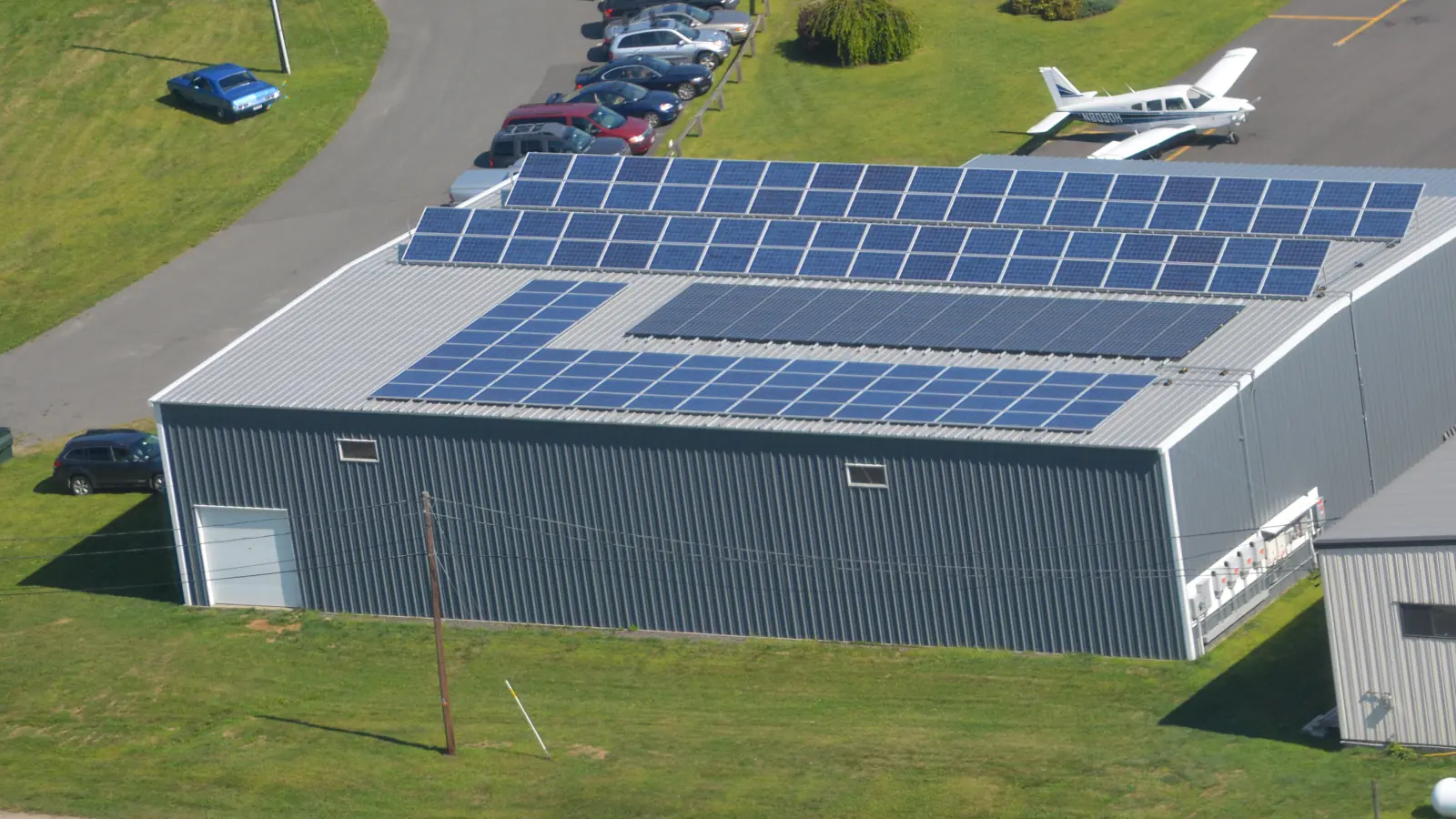

A third-party solar power purchase agreement (PPA) lets a company own a plant at your site and sell you its power. Whether that is legal depends on how your state defines a utility. DSIRE, a national database of state energy policies, counts at least 29 states and DC where such PPAs are authorized or in use, and six where they appear barred (May 2026).
In short
- DSIRE’s May 2026 map shows third-party solar PPAs authorized or in use in at least 29 states and DC, and apparently barred in six.
- Where a PPA is barred, a business can look at buying the plant or, in some of those states, a solar lease.
- Check your state’s rule for your utility area and any size limit, then the contract’s owner, price, yearly increase, term and buyout.
What is a third-party solar PPA, and how is it different from a lease?
In a third-party solar PPA, a company that is neither you nor your utility owns, operates and maintains a solar plant at your site, and you buy the power it produces for an agreed period. The US Environmental Protection Agency (EPA) calls this the solar services model: the host buys the plant’s output, not the plant. You pay only for what the plant produces, at a price per kWh set in the contract, and your utility still supplies the rest.
In a solar lease, the company also owns the plant, but you pay a scheduled amount to use it, whatever it produces, as the California Public Utilities Commission (CPUC) explains in its guide for homes. Under a PPA the company sells you electricity, which some states reserve to utilities; under a lease it rents you equipment. DSIRE notes that some states that limit or bar third-party PPAs explicitly allow solar leases.
| What differs | PPA | Lease |
|---|---|---|
| Who owns the plant | The provider or its financing partner | The leasing company |
| What you pay | Each kWh the plant produces, at the contract price | A scheduled amount each period, whatever the plant produces |
| If output falls short | You pay for fewer kWh | You pay the same |
| Federal credit (Section 48E) | The owner’s | The lessor’s, unless it elects to pass it to you |
For the federal credit, the IRS lets a lessor elect to treat the lessee as having acquired the plant. Who claims what, and the December 31, 2027 deadline for solar whose construction starts now, are explained in the US solar tax credit in 2026.
Why does state law decide whether a solar PPA is allowed?
The question is whether a company that sells you power from a plant at your site becomes a utility. DSIRE notes that the answer usually lies in how state statutes, regulations or court decisions define a utility, in commission decisions, or in the rules of state incentive programs. If the company counts as a utility, it falls under the state commission and can clash with the local utility’s right to serve your area.
Courts have answered the question both ways. In 1988 the Florida Supreme Court upheld the state commission’s view that a company selling electricity to a single customer supplies it to the public, and so is a public utility. In 2014 the Iowa Supreme Court found that a solar company selling a city all the power from a plant on city property, paid per kWh, was not a public utility, after weighing the facts of the arrangement.
Where PPAs are allowed, limits can still apply. Some states cap the plant’s size against the site’s yearly use, or allow PPAs only for certain customers. And a state that allows them may not allow them everywhere: DSIRE notes that municipal utilities may not allow them even where they are allowed or in use in investor-owned utility areas.
Which states allow third-party solar PPAs?
DSIRE, run by the NC Clean Energy Technology Center at North Carolina State University, publishes a map of third-party solar PPA policies. As of November 17, 2026, its latest version is dated May 2026. It sorts the states into the three groups below, with the map’s own notes on limits.
The map’s notes describe the rules mainly with homes in mind. DSIRE says the map is a public service, not legal advice, and that other licensing requirements may still apply, so check the rule for a business site before you sign.
| Group on the map | States |
|---|---|
| Authorized by the state or in use, at least in some areas: 29 states and DC | Arizona (certain sectors only), Arkansas (tax-exempt entities only), California, Colorado (size limits), Connecticut, Delaware, District of Columbia, Georgia, Hawaii, Illinois, Iowa, Maine, Maryland, Massachusetts, Michigan, Nevada (size limits), New Hampshire, New Jersey, New Mexico, New York, Ohio, Oklahoma, Oregon, Pennsylvania, Rhode Island, Texas (size limits), Utah, Vermont, Virginia (certain utilities and customer types), West Virginia |
| Apparently disallowed, or restricted by legal barriers: 6 states | Alabama, Florida, Kansas, Kentucky, North Carolina, South Carolina |
| Status unclear or unknown: 15 states | Alaska, Idaho, Indiana, Louisiana, Minnesota, Mississippi, Missouri, Montana, Nebraska, North Dakota, South Dakota, Tennessee, Washington, Wisconsin, Wyoming |
The map also puts Puerto Rico and the Northern Mariana Islands in the first group, and marks solar leases as explicitly allowed in Florida, Louisiana, Mississippi, North Carolina and South Carolina. Groups as shown on the map, read on November 17, 2026.
What do the laws say in key states?
The table goes back to the statutes and court decisions behind five states on the map. Laws change, so check the current text, and your utility’s rules, before you sign.
| State | What the law or the courts say | What it means for a business |
|---|---|---|
| California | Public Utilities Code sections 218 and 2868: a company producing electricity with solar is not an electrical corporation if each system serves no more than two other customers, on the parcel where it stands or the one next to it | A PPA for a plant at your site is allowed within those limits |
| Texas | Utilities Code section 39.916: the owner of a renewable plant of up to 2,000 kW on a customer’s side of the meter is not an electric utility, power generation company or retail electric provider, and need not register, if its estimated yearly output is no more than the customer’s estimated yearly use | A PPA is possible if the plant is sized to no more than the site’s yearly use |
| Iowa | Supreme Court, July 11, 2014: a solar company selling a city all the power of a plant on city property, per kWh, was not a public utility | A PPA is possible; the court weighed the facts of the arrangement |
| Florida | Statutes section 366.02 defines a public utility as anyone supplying electricity to or for the public, cooperatives and municipalities aside; in 1988 the Supreme Court upheld the commission’s view that a sale to a single customer counts | A third party selling you power would be regulated as a public utility; DSIRE notes that the commission has permitted residential solar leases |
| North Carolina | Court of Appeals, September 19, 2017, affirmed by the Supreme Court on May 11, 2018: an organization that owned a plant on a church’s property and charged the church per kWh was operating as a public utility | A third-party PPA is not possible under that ruling; DSIRE notes that leasing solar equipment is explicitly allowed |
Not legal advice. Confirm the rule for your site, your utility and your plant’s size with a lawyer before you sign.
What can a business do where a PPA is not allowed?
Buy the plant. A business that owns a plant and uses its power is not selling electricity to anyone. In the Florida case, the Supreme Court noted that the law limits competition in selling electricity, not generating your own. Buying also brings the federal credit and depreciation if the plant qualifies, as commercial solar in the United States explains.
Lease it, where leasing is allowed. DSIRE marks solar leases as explicitly allowed in Florida, Louisiana, Mississippi, North Carolina and South Carolina. With a lease the leasing company makes the investment, but you pay the same amount whatever the plant produces, so check its expected output with care.
Ask your utility what it offers businesses that want renewable power, on what terms and for how long.
Where PPAs are allowed only for some customers, check that you qualify. On DSIRE’s map, for example, they are limited to certain sectors in Arizona and to tax-exempt entities in Arkansas.
What should you check in a US solar contract?
Whether you sign a PPA or a lease, get these points in writing:
- Owner: who owns, maintains and insures the plant, and who signs the connection agreement with your utility.
- Price: for a PPA, the price per kWh in the first year and any yearly increase, written into the contract from the start; for a lease, the payment and whether it can rise. The EPA says PPA escalators often run from 1 to 5 percent a year.
- Term: how many years, and whether they run from signing or from switch-on. The EPA puts most solar PPAs between six and 25 years.
- Metering: you should pay only for the plant’s metered output, on a meter you can read.
- Buyout: whether and when you can buy the plant, and at what price or by what formula.
- Selling or leaving the building: whether the contract passes to a buyer or a new tenant, and what ending early costs.
- Tax credit: whether the price assumes the owner claims Section 48E, and what happens if the plant is not in service by December 31, 2027.
- State rule: how the provider has checked that the arrangement is allowed for your state, your utility and the plant’s size.
Then have a lawyer read the contract, and confirm any tax point with a CPA or tax adviser.
How Aeternus helps
Aeternus Power is an independent energy company based in Madrid. We originate, qualify, structure and finance energy projects, solar-led and with storage, and bring in the builders and financing partners for each one. We never own the plants. A commission is paid by whoever builds or finances the project, never by you, and only if the project goes ahead.
Our office in California opens on December 1, 2026. We have no office in any other state, and we cannot yet say which ways to pay we will arrange in the US, or when. If you tell us about your site, where it is and which utility serves it, we will say within two working days whether we can help there. How we work with businesses is on our business page.
Questions
Are solar PPAs legal in every state?
No. DSIRE’s map of May 2026 shows third-party solar PPAs authorized or in use in at least 29 states and DC, apparently barred in six and unclear in 15. Even where they are allowed, some utility areas and customers can be left out.
Is a solar PPA legal in Florida?
Not for a third party selling you power. In 1988 the Florida Supreme Court upheld the state commission’s view that selling electricity to even one customer makes the seller a public utility. DSIRE notes that the commission has permitted residential solar leases.
Can a business sign a solar PPA in Texas?
Yes, within a limit. Under Utilities Code section 39.916, the owner of a plant on the customer’s side of the meter is not treated as a utility or retail provider if the plant’s estimated yearly output is no more than the customer’s estimated yearly use.
Can I get a solar PPA in North Carolina?
Not from a third party selling you the plant’s power. In 2017 the Court of Appeals held that such an arrangement made the seller a public utility, and the Supreme Court affirmed in 2018. DSIRE notes that leasing solar equipment is explicitly allowed.
Which states allow solar leases but not PPAs?
On DSIRE’s map of May 2026, Florida, North Carolina and South Carolina appear to bar third-party PPAs but explicitly allow solar leases. Louisiana and Mississippi also allow leases explicitly, while their PPA status is marked unclear.
Who gets the tax credit in a solar PPA or lease?
The owner of the plant claims the Section 48E credit, so under a PPA that is the provider, not your business. A lessor may elect to pass the credit to you. The rules and the 2027 deadline for solar are in the US solar tax credit in 2026.
Sources
- DSIRE, NC Clean Energy Technology Center: third-party solar PV power purchase agreement policies, map with authorities and references (May 2026): https://ncsolarcen-prod.s3.amazonaws.com/wp-content/uploads/2026/05/DSIRE_3rd-Party-PPA_May2026.pdf
- DSIRE, NC Clean Energy Technology Center: detailed summary maps and their update dates: https://www.dsireusa.org/resources/detailed-summary-maps/
- California Public Utilities Code section 218, electrical corporation (California.Public.Law copy, verified by the site against the official text on November 16, 2026): https://california.public.law/codes/public_utilities_code_section_218
- California Public Utilities Code section 2868, independent solar energy producer (California.Public.Law copy, verified by the site against the official text on November 16, 2026): https://california.public.law/codes/public_utilities_code_section_2868
- Texas Utilities Code section 39.916, interconnection of distributed renewable generation (Texas.Public.Law): https://texas.public.law/statutes/tex._util._code_section_39.916
- Florida Statutes (2026), section 366.02, definitions (Online Sunshine, Florida Legislature): http://www.leg.state.fl.us/statutes/index.cfm?App_mode=Display_Statute&URL=0300-0399/0366/Sections/0366.02.html
- Florida Supreme Court: PW Ventures, Inc. v. Nichols, 533 So. 2d 281 (October 27, 1988), Caselaw Access Project: https://static.case.law/so2d/533/html/0281-01.html
- Iowa Supreme Court: SZ Enterprises, LLC v. Iowa Utilities Board, No. 13-0642, 850 N.W.2d 441 (July 11, 2014), Caselaw Access Project: https://static.case.law/nw2d/850/html/0441-01.html
- North Carolina Court of Appeals: State ex rel. Utilities Commission v. N.C. Waste Awareness and Reduction Network, 805 S.E.2d 712 (September 19, 2017), Caselaw Access Project: https://static.case.law/se2d/805/html/0712-01.html
- Supreme Court of North Carolina: the same case, affirmed per curiam, 812 S.E.2d 804 (May 11, 2018), Caselaw Access Project: https://static.case.law/se2d/812/html/0804-01.html
- US Environmental Protection Agency: Solar Power Purchase Agreements (updated April 9, 2026): https://www.epa.gov/green-power-markets/solar-power-purchase-agreements
- CPUC: California Solar Consumer Protection Guide, leases and power purchase agreements: https://www.cpuc.ca.gov/solarguide
- IRS: Instructions for Form 3468 (2025), the lessor’s election and the end date for wind and solar (updated August 28, 2026): https://www.irs.gov/instructions/i3468
Latest
Solar PPAs for businesses in California: how they work and what to check