The US solar tax credit in 2026: what changed for homes and businesses
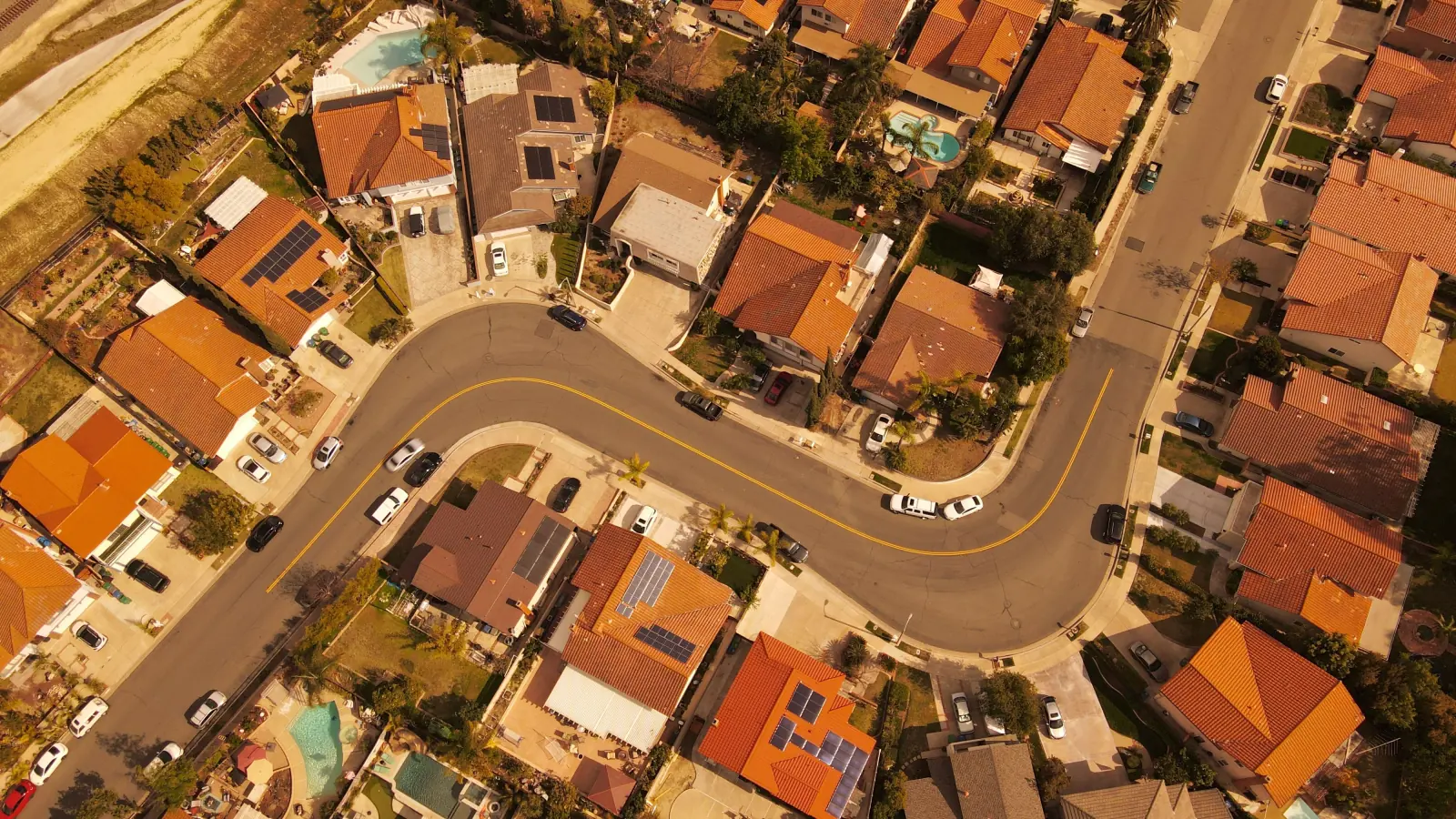
The 30 percent federal tax credit for homeowners who buy solar ended for systems whose installation was completed after December 31, 2025. What remains is a business credit, Section 48E, for whoever owns a system. That may be a business with a plant at its own site, or a company that owns a system on your home under a lease or a power purchase agreement (PPA). For solar, that owner now faces a December 31, 2027 deadline for any system whose construction starts after July 4, 2026. This guide sets out who can claim what, as of November 16, 2026; confirm your own case with a tax professional.
What ended on December 31, 2025?
Until the end of 2025, a household that bought solar, a battery or other clean energy equipment for its home could claim the residential clean energy credit (Section 25D). It was worth 30 percent of the cost, taken off federal income tax. The federal tax law of July 4, 2025, Public Law 119-21, ended it for any expenditure made after December 31, 2025. Many people call that law the One Big Beautiful Bill Act; the IRS now also calls it the Working Families Tax Cuts.
The date that counts is when installation is completed, not when you paid. The IRS says that if installation is completed after December 31, 2025, the expenditure counts as made after that date, so no credit can be claimed, even if you paid in 2025. The same law ended the energy efficient home improvement credit (Section 25C) for property placed in service after 2025.
One thing carries on. If you completed a qualifying system by the end of 2025 and your tax was too low to use the whole credit, you can carry the unused part forward to later years. The Congressional Research Service notes that the 2025 law did not change those carryforward rules.
What can a homeowner still get in 2026?
No federal tax credit for a system you buy for your own home. Nor can you claim the business credit instead. The California Public Utilities Commission (CPUC) warns that putting solar or storage on a home does not qualify you for business tax credits. It adds that anyone telling you to set up a limited liability company (LLC) to claim them is asking you to do something illegal.
What remains comes through a company. When a company owns the system on your home and sells you its power under a PPA, or rents the system to you under a lease, that company may claim the business credit, Section 48E. Part of its value can then reach you through the contract price; how much depends on the contract. In 2026 that makes a lease or a PPA the usual way the credit’s value reaches a home. How a home PPA works is explained in solar PPAs for California homes, and whether home solar still pays in home solar in California in 2026.
| Situation | What can be claimed |
|---|---|
| You buy a system and its installation is completed in 2026 | Nothing: Section 25D ended for expenditures after December 31, 2025 |
| You completed a system by December 31, 2025 and have credit left over | You can carry the unused credit forward to later years |
| A company owns the system and sells you its power under a PPA | The company may claim Section 48E, if it meets the deadlines and sourcing rules |
| A company leases you a solar electric system | The same: the 2025 law’s leasing restriction does not cover solar electric systems |
| A company leases you a solar water heater or a small wind turbine | No credit, for the company’s tax years beginning after July 4, 2025 |
| A company owns a battery at your home | The company may claim Section 48E, subject to the sourcing rules; the 2027 solar deadline does not apply to storage |
A summary as of November 16, 2026, not tax advice. Confirm your own case with a tax professional.
How does the business credit work?
The clean electricity investment credit (Section 48E) goes to the owner of a clean electricity plant or of energy storage placed in service from 2025. That owner may be a business with a plant at its own site, as explained in solar PPAs for businesses in California, or a company that owns systems on homes and businesses. The IRS allows investment credits only for property that can be depreciated or amortized, which is why the credit sits with the owner of a business asset.
The IRS sets the credit at 6 percent of the qualifying investment. It rises to 30 percent for a plant under 1 megawatt (AC), or for a larger plant that pays prevailing wages and employs registered apprentices. Meeting domestic content rules adds up to 10 percentage points, and so does standing in an energy community, a type of area defined in the law.
An owner that cannot use the credit against its own tax can transfer it to another company for cash. Tax-exempt organizations and government bodies may be able to receive it as a direct payment, called elective pay. An owner may also choose the clean electricity production credit (Section 45Y) instead, based on the power the plant produces, with the same solar deadlines; it cannot claim both.
What are the deadlines for solar?
The 2025 law set an end date for solar. There is no credit for a solar plant placed in service after December 31, 2027 if its construction began after July 4, 2026. That start date has passed. So for any solar system whose construction starts now, on a home or at a business, the owner can claim the credit only if the system is placed in service by December 31, 2027.
A plant whose construction began by July 4, 2026 is not bound by that deadline, although IRS rules require continuous work until it is finished. Under the IRS’s physical work test, construction begins when physical work of a significant nature begins. An IRS notice of August 2025 had narrowed the other ways of showing an early start for solar plants above 1.5 megawatts (AC), and a federal court set that notice aside on June 6, 2026. If a provider says its project began in time, ask how that was established.
| When construction began | Deadline to be placed in service | Foreign-entity sourcing test |
|---|---|---|
| On or before December 31, 2025 | No 2027 deadline; work must continue until finished | Does not apply |
| January 1 to July 4, 2026 | No 2027 deadline; work must continue until finished | Applies |
| After July 4, 2026 | December 31, 2027 | Applies |
Batteries are not subject to the 2027 deadline. Whether and when construction began is a technical question; confirm it with a tax professional.
What are the foreign-entity rules?
The 2025 law added two more conditions. First, a plant or battery whose construction began after December 31, 2025 earns no credit if it includes material assistance from a prohibited foreign entity. This is measured with a cost ratio: the share of the cost of its manufactured products that does not come from such entities must reach a minimum percentage, set by the year construction begins. The IRS published interim rules and safe harbors for the calculation in Notice 2026-15 on February 12, 2026, and plans further guidance.
Second, for tax years beginning after July 4, 2025, no credit is allowed if the owner itself is a specified foreign entity or a foreign-influenced entity. If an offer for your home or business counts on the credit, ask how its equipment and its owner meet these rules.
What is different in California?
Property tax. Under Revenue and Taxation Code section 73, new solar systems have been excluded from property tax reassessment, but the exclusion becomes inoperative on January 1, 2027. It covers systems completed before that date, plus any part already built on January 1, 2026. Systems already excluded stay excluded until the property changes ownership. For a system finished later, ask who would pay any extra property tax.
Consumer protection. For homes served by PG&E, SCE, SDG&E and three smaller utilities, the provider must collect your signature on the CPUC’s Solar Consumer Protection Guide. For contracts signed from December 15, 2026, the utility application must include version 4 of the guide, which lists the LLC idea above among its false claims. And only a licensed contractor, or a registered salesperson working for one, may give you a quote or offer for a home solar system. How to check them is in how to choose a home solar company in California.
What should you ask before you sign?
Whether the offer is for a home or a business, these questions protect you:
- Is a 30 percent homeowner credit promised on a system you would buy now? For systems completed after 2025, it no longer exists.
- Does the price assume the owner claims Section 48E, and what happens to the price if the system is not in service by December 31, 2027?
- When will construction start, and when will the system be placed in service? Get both dates in writing.
- How do the equipment and the owner meet the foreign-entity rules?
- If your business is buying a plant, will you use the credit yourself or transfer it, and who prepares the filing?
- Who would pay any property tax on a system finished after 2026?
- Is anyone suggesting an LLC so you can claim a business credit at home? The CPUC says not to do business with them.
Then confirm the tax points with a tax professional, such as a CPA or an enrolled agent.
How Aeternus helps
Aeternus Power is an independent energy company based in Madrid. We originate, qualify, structure and finance energy projects, solar-led and with storage, and bring in the builders and financing partners for each one. We never own the plants. A commission is paid by whoever builds or finances the project, never by you, and only if the project goes ahead.
For homes in California, we are arranging a home solar PPA. It is not available yet, and we will not give a date until a provider is signed. You can register your interest, and Aeternus Power in California sets out what we plan. We will never quote you for a home system ourselves, since in California only a licensed contractor or its registered salesperson may do that.
For a business site in California, tell us about it. Our office there opens on December 1, 2026. We reply within two working days and will say plainly whether and when we can help. How we work with businesses is on our business page.
Questions
Can I still get the 30% solar tax credit in 2026?
Not for a home system you buy whose installation is completed in 2026. The residential clean energy credit ended for expenditures made after December 31, 2025, and the IRS counts the expense when installation is complete. Unused credit from a system completed earlier can still be carried forward.
Does a solar lease or PPA still get the federal tax credit?
The company that owns the system may claim the business credit, Section 48E, if the system meets the deadlines and sourcing rules. For a system whose construction starts now, it must be in service by December 31, 2027. The 2025 law’s leasing restriction covers solar water heaters and small wind turbines, not solar electric systems.
When does the commercial solar tax credit end?
For a solar plant whose construction began after July 4, 2026, the owner can claim the credit only if the plant is placed in service by December 31, 2027. Plants begun by July 4, 2026 are not bound by that date, and batteries are not subject to it.
Can I set up an LLC to claim the business solar credit for my home?
No. The CPUC warns that solar or storage on a home does not qualify for business tax credits, and that anyone suggesting an LLC to claim them is asking you to do something illegal.
Are there any federal home energy tax credits left in 2026?
Not the two main ones. The residential clean energy credit (Section 25D) ended for expenditures made after December 31, 2025, and the energy efficient home improvement credit (Section 25C) for property placed in service after that date.
Does California still exclude solar from property tax?
Only until January 1, 2027, when the exclusion becomes inoperative. It covers systems completed before then, plus any part already built on January 1, 2026, and those stay excluded until the property changes ownership.
Sources
- IRS: One, Big, Beautiful Bill provisions (Working Families Tax Cuts; home energy credit expirations; updated November 10, 2026): https://www.irs.gov/newsroom/one-big-beautiful-bill-provisions
- IRS Fact Sheet FS-2025-05 (August 21, 2025): FAQs on the modification of sections 25C, 25D and other credits under Public Law 119-21: https://www.irs.gov/EnergyCreditFAQs
- IRS: Residential Clean Energy Credit, Section 25D (30 percent, carryforward of unused credit): https://www.irs.gov/credits-deductions/residential-clean-energy-credit
- Public Law 119-21 (July 4, 2025), sections 70505, 70506, 70512 and 70513 (GPO): https://www.govinfo.gov/content/pkg/PLAW-119publ21/html/PLAW-119publ21.htm
- 26 U.S. Code section 25D (definitions: solar water heating, solar electric and small wind property), Legal Information Institute: https://www.law.cornell.edu/uscode/text/26/25D
- IRS: Clean Electricity Investment Credit, Section 48E (rates, bonuses, direct payment or transfer): https://www.irs.gov/credits-deductions/clean-electricity-investment-credit
- IRS: Instructions for Form 3468 (2025), clean electricity investment credit (end date for solar, leased property, foreign entity rules, plants under 1 MW): https://www.irs.gov/pub/irs-pdf/i3468.pdf
- IRS IR-2026-23 (February 12, 2026): guidance on material assistance from prohibited foreign entities, Notice 2026-15: https://www.irs.gov/newsroom/treasury-irs-provide-guidance-for-certain-energy-tax-credits-regarding-material-assistance-provided-by-prohibited-foreign-entities-under-the-one-big-beautiful-bill
- IRS: Elective pay and transferability: https://www.irs.gov/credits-deductions/elective-pay-and-transferability
- US District Court for the District of Columbia, Oregon Environmental Council v. IRS, order of June 6, 2026 vacating IRS Notice 2025-42 (published by the City and County of San Francisco): https://media.api.sf.gov/documents/2026-6-6_ORE_v_IRS_Order.pdf
- Congressional Research Service, Insight IN12611 (September 25, 2025): expiration and carryforward rules for the residential clean energy credit: https://www.everycrsreport.com/reports/IN12611.html
- CPUC: California Solar Consumer Protection Guide (signature required; version 4 for contracts signed from December 15, 2026): https://www.cpuc.ca.gov/industries-and-topics/electrical-energy/demand-side-management/customer-generation/california-solar-consumer-protection-guide
- CPUC: California Solar Consumer Protection Guide, version 4 (PDF; false claims, including the LLC and business tax credits): https://www.cpuc.ca.gov/-/media/cpuc-website/divisions/energy-division/documents/solar-guide/2025-versions/2025-updates/solarguide26_040626_simple.pdf
- California State Board of Equalization, Letter to Assessors 2026/034 (September 1, 2026): solar new construction exclusion inoperative from January 1, 2027: https://www.boe.ca.gov/proptaxes/pdf/lta26034.pdf
- California State Board of Equalization, Letter to Assessors 2024/031 (August 26, 2024): construction in progress and the solar exclusion: https://www.boe.ca.gov/proptaxes/pdf/lta24031.pdf
- CSLB: advisory on lead generation and solar broker services in the residential solar industry (Contractor Newsletter, Spring 2020): https://web.cslb.ca.gov/Resources/Newsletters/ContractorNewsletterSpring_2020.pdf
Latest
Solar PPAs for businesses in California: how they work and what to check