Tax benefits of a solar PPA: what your business deducts in Spain, Portugal and the US, and who claims the incentives
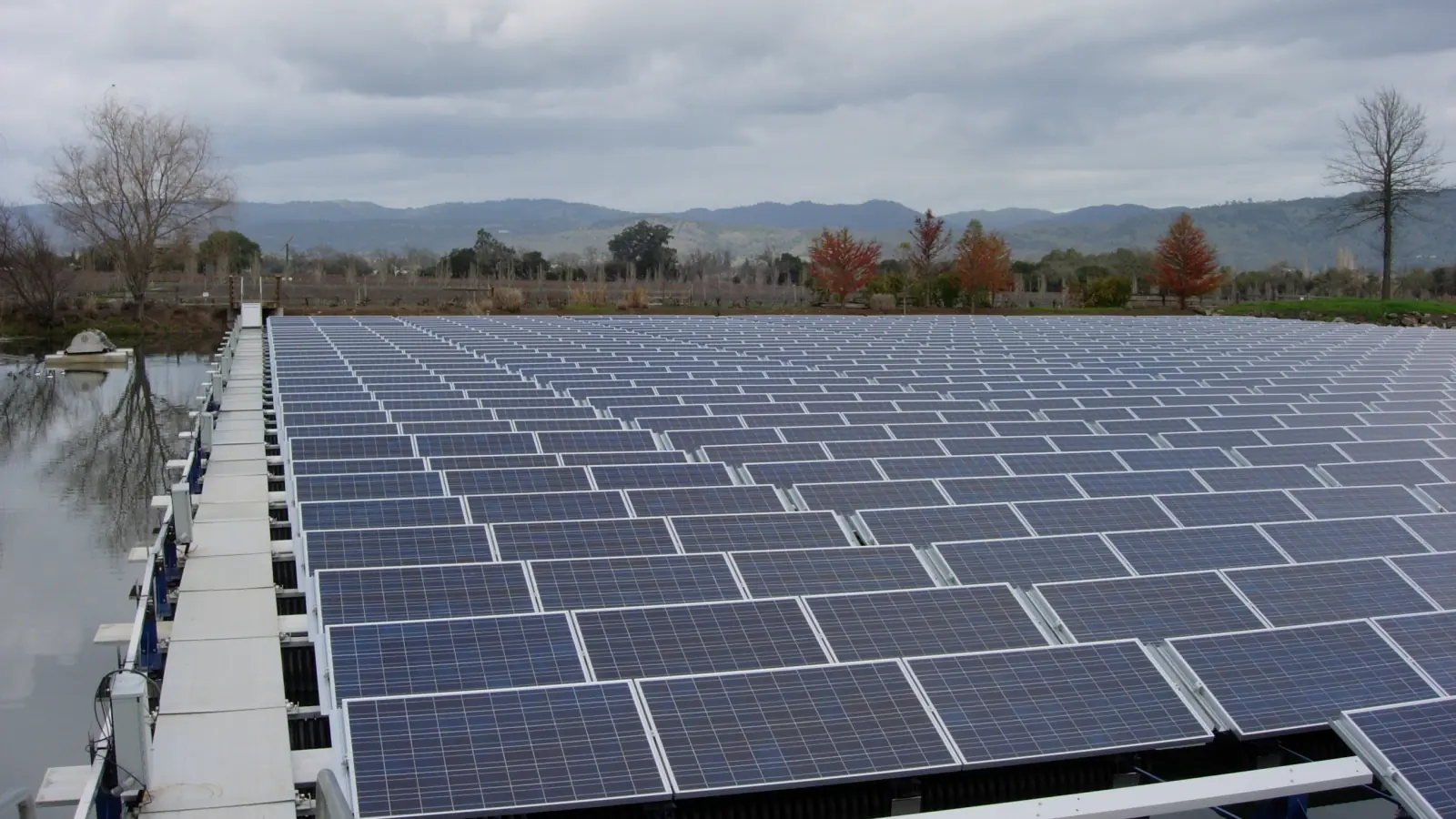

Under a power purchase agreement (PPA), a financing partner owns the solar plant at your site and your business pays only for the power it supplies, at a price per kWh set in the contract. For tax, that makes the PPA a running cost, not an investment: in Spain, Portugal and the US your business can generally deduct what it pays for the power, and in Spain and Portugal it can recover the VAT on the invoices if it has full deduction rights. There is no plant for you to depreciate, and the plant’s own tax incentives go to its owner. Buying the plant works the other way round. This guide sets out both, country by country, as of 17 November 2026.
PPA or buying: who gets which tax benefit
The plant can be the same either way. What changes for tax is who owns it, and so whether your business records an expense or an investment. What is a PPA? explains how the contract works; the table sums up the tax side in general terms.
| Aspect | With a PPA | If you buy the plant |
|---|---|---|
| What you pay | Each kWh the plant supplies, at the price set in the contract | The plant itself, from your own funds or a loan |
| How the cost lowers your tax | The invoices are an operating expense, deducted year by year | Depreciation over the years the law allows, or faster where an incentive applies |
| VAT in Spain and Portugal | On each invoice; recoverable with full deduction rights | On the purchase; recoverable on the same terms |
| Investment incentives | The owner’s, which may be reflected in the price | Yours, if the plant and your business meet each rule |
| On your balance sheet | Nothing, unless the contract counts as a lease in your accounts | The plant, as an asset |
Each section below cites the law in each country. This guide is about businesses, not homes.
Spain: corporate tax and VAT under a PPA
In Spanish corporate tax (Law 27/2014), taxable profit starts from the accounting profit. Expenses count in the tax year in which they accrue, whenever they are paid, and an expense that has not been recorded in the profit and loss account is not deductible (articles 10 and 11). So the PPA invoices are an ordinary expense, deducted in the year the power is supplied, as long as they are recorded.
The invoices carry VAT, because electricity counts as goods for VAT, at the general rate of 21%. Your business deducts that VAT if it holds the invoice and uses the power in activities that are subject to VAT and not exempt. If it also carries out exempt activities, such as healthcare, education or financial services, only a share is deductible (VAT Law 37/1992, articles 94, 97 and 102).
Spain: buying the plant, and the local tax rebates
If your business buys the plant, it depreciates it instead. The corporate tax table allows renewable plants up to 7% a year, over at most 30 years (article 12). Self-consumption plants that start operating in 2026 can also be depreciated freely, as quickly as the company chooses, under additional provision 17 as extended by Royal Decree-law 7/2026: up to €500,000 of investment, provided the average headcount is kept for 24 months, and never for buildings. Under a PPA, the plant and its depreciation belong to the financing partner.
Councils can also cut three local taxes, but only where their tax bylaw provides for it: up to 50% of the property tax (IBI) on a building with solar systems, up to 95% of the tax on the building works (ICIO), and up to 50% of the business activity tax (IAE) for taxpayers that use or produce renewable energy (Royal Legislative Decree 2/2004, articles 74.5, 103.2.b and 88.2.c). With a PPA, who benefits depends on who pays each tax:
- IBI: paid by the holder of the property, so a rebate goes to the building’s owner. The law ties it to the building, not to who owns the plant, but each bylaw can add conditions that a PPA may not meet.
- ICIO: paid by whoever bears the cost of the works, which under a PPA is normally the financing partner, so the rebate lowers its cost.
- IAE: the law covers taxpayers that use renewable energy, not only those that produce it, but companies with a net turnover under €1 million do not pay the IAE at all, and each bylaw sets its own conditions.
Each council sets the percentage, the years and the conditions in its bylaw. Our guide to solar tax incentives in Spain has the detail.
Portugal: corporate tax (IRC) and VAT under a PPA
Portugal’s corporate tax code (CIRC) lets a company deduct all expenses and losses incurred to obtain or secure its taxable income, and names energy among them (article 23). Expenses must be backed by documents, and where the supplier has to issue an invoice, the invoice is that document. So the PPA invoices count as an ordinary energy expense.
On VAT (IVA), a company can deduct the tax charged on goods and services it uses for supplies that are subject to VAT and not exempt (VAT Code, article 20). A company whose supplies are all taxed therefore recovers the VAT on the PPA invoices; one that also makes exempt supplies cannot deduct the part used for them.
Portugal: buying the plant instead
If your company buys the plant, it depreciates it. For tax purposes, solar photovoltaic equipment can be depreciated at up to 8% a year (code 2250 in table II of Regulatory Decree 25/2009, as amended by Law 82-D/2014).
The main investment tax relief, the RFAI, is another matter. In a ruling of 17 April 2023 on one company’s request, the tax authority (AT) concluded that buying photovoltaic equipment on its own, to produce power for self-consumption, does not qualify, because it does not increase the site’s installed production capacity. Under a PPA, the depreciation and any incentive belong to the financing partner, as the owner. For grants and the wider rules, see our guide to commercial solar in Portugal.
United States: deductions, the 48E credit and the 2025 law
A US business can deduct the costs of running it if they are ordinary and necessary, and the IRS lists utilities among them (Publication 334; section 162 of the Internal Revenue Code). What a business pays for the power a PPA supplies is generally treated the same way. The US has no national VAT; many states have their own sales taxes, with different rules on what they cover, so ask your CPA whether yours applies to the power you buy.
The plant’s federal incentives go to its owner. The clean electricity investment credit (section 48E) is claimed by the taxpayer that builds or acquires the plant and can depreciate it, so under a PPA that is the system owner, which also takes the depreciation. If you buy, your business can claim both itself, if the plant meets the rules. The 2025 law, Public Law 119-21, also reinstated a 100% special depreciation allowance for certain qualified property acquired and placed in service after 19 January 2025.
The same law ended or narrowed two credits. The residential clean energy credit (section 25D) is not allowed for any expenditures made after 31 December 2025. And for wind and solar, the IRS explains, it terminated the 48E credit for facilities placed in service after 2027 where construction began after 4 July 2026. That date has passed, so a solar plant whose construction starts now must be placed in service by 31 December 2027 for the credit to remain available.
It also added foreign-entity rules. For tax years beginning after 4 July 2025, no credit is allowed to a taxpayer that is a specified foreign entity or a foreign-influenced entity, and no credit is allowed for a plant whose construction begins after 2025 if it includes material assistance from a prohibited foreign entity. The IRS has published interim guidance on that test in Notice 2026-15. For homes in California, see solar PPAs for California homes.
Accounting: when a PPA counts as a lease
Under IFRS 16, a contract is, or contains, a lease if it conveys the right to control the use of an identified asset for a period of time in exchange for payment. That needs both the right to obtain substantially all the economic benefits from using the asset, which include its output, and the right to direct its use. A PPA under which your business takes all the output of one plant at its site can meet part of that test, so some PPAs count as leases, with an asset and a liability on the balance sheet, and others do not.
Spain’s general accounting plan (PGC) treats as a lease any agreement, whatever its legal form, that grants the right to use an asset for a period in exchange for payments, and Portugal’s standard on leases (NCRF 9) applies to agreements that transfer the right to use assets even when the owner also runs or maintains them. In Spain, taxable profit starts from the accounting profit, so the answer can also affect how and when the cost is deducted. Your accountant or auditor decides, contract by contract, so ask before you sign.
How Aeternus helps
Aeternus Power is an independent energy company. We originate, qualify, structure and finance renewable energy projects: we study your consumption and your site, size the plant, and set out buying, leasing and a PPA with the same figures, so your adviser can see the tax effect of each. PPAs start at 50 kWp; buying or leasing works at any size. Our guide to solar PPAs in Spain covers the contract itself.
We never own the plants. We are paid a commission by the builder or financing partner we bring in, never by you, and only if the project goes ahead. We work with businesses in Spain, Portugal and Colombia, and our California office opens on 1 December 2026. For a first figure, use the preview on our business page, or contact us: we reply within two working days.
This guide is general information as of 17 November 2026, not tax advice: confirm how it applies to your business with your tax adviser or CPA.
Questions
Is a solar PPA tax deductible?
Generally, yes. In Spain and Portugal the PPA invoices are an ordinary business expense: in Spain they are deducted in the tax year in which they accrue, if recorded, and in Portugal they must be backed by the invoice. In the US, utility costs are deductible when they are ordinary and necessary. Confirm your case with your tax adviser.
Can my business depreciate a plant it gets through a PPA?
No. The financing partner owns the plant, so the depreciation and any investment incentives are its own and may be reflected in your price. To claim them, your business has to buy the plant.
Who gets the federal solar tax credit with a PPA in the US?
The system owner. The section 48E credit goes to the taxpayer that builds or acquires the plant and can depreciate it. For solar plants whose construction began after 4 July 2026, it applies only if they are placed in service by 31 December 2027.
Can I recover the VAT on PPA invoices?
In Spain and Portugal, yes, if your business uses the power for activities subject to VAT and not exempt, and holds proper invoices. With exempt activities, only part is deductible. The US has no national VAT, though states may tax sales.
Does a PPA go on the balance sheet?
It can. Under IFRS 16 some PPAs count as leases, and Spanish and Portuguese accounting rules also look at whether you get the right to use an asset. Your accountant or auditor decides, contract by contract.
Sources
- BOE: Ley 27/2014 del Impuesto sobre Sociedades, articles 10, 11 and 12 and additional provision 17 (consolidated text, last updated 2 September 2026): https://www.boe.es/buscar/act.php?id=BOE-A-2014-12328
- BOE: Ley 37/1992 del Impuesto sobre el Valor Añadido, articles 8, 20, 90, 94, 97 and 102 (consolidated text): https://www.boe.es/buscar/act.php?id=BOE-A-1992-28740
- BOE: Real Decreto Legislativo 2/2004, local finance law, articles 63, 74, 82, 88, 101 and 103 (consolidated text): https://www.boe.es/buscar/act.php?id=BOE-A-2004-4214
- BOE: Real Decreto 1514/2007, Spanish general accounting plan (PGC), valuation rule 8 on leases (consolidated text): https://www.boe.es/buscar/act.php?id=BOE-A-2007-19884
- Portal das Finanças: Código do IRC, article 23, deductible expenses and losses: https://info.portaldasfinancas.gov.pt/pt/informacao_fiscal/codigos_tributarios/CIRC_2R/Pages/irc23.aspx
- Portal das Finanças: Código do IVA, article 20, transactions that give the right to deduct: https://info.portaldasfinancas.gov.pt/pt/informacao_fiscal/codigos_tributarios/civa_rep/Pages/iva20.aspx
- Autoridade Tributária: Decreto Regulamentar 25/2009 on depreciation, code 2250 for solar equipment (8%) as worded by Law 82-D/2014: https://info.portaldasfinancas.gov.pt/pt/informacao_fiscal/legislacao/outros_diplomas/Documents/Dec_Regulamentar25_2009.pdf
- Autoridade Tributária: binding ruling, case 2023000364 (17 April 2023), RFAI and photovoltaic equipment for self-consumption: https://info.portaldasfinancas.gov.pt/pt/informacao_fiscal/informacoes_vinculativas/rendimento/circ/Documents/FD_PIV_24275.pdf
- Comissão de Normalização Contabilística: Aviso 8256/2015, accounting standards including NCRF 9 on leases: https://www.cnc.min-financas.pt/pdf/SNC/2016/Aviso_8256_2015_29Jul_NCRF_RG.pdf
- IRS: Instructions for Form 3468 (2025), clean electricity investment credit, wind and solar termination and prohibited foreign entity rules (updated 28 August 2026): https://www.irs.gov/instructions/i3468
- IRS: One, Big, Beautiful Bill provisions, including the end of the section 25D credit and Notice 2026-15 (updated 10 November 2026): https://www.irs.gov/newsroom/one-big-beautiful-bill-provisions
- IRS: Publication 334 (2025), Tax Guide for Small Business, business expenses: https://www.irs.gov/publications/p334
- IRS: Publication 946 (2025), How To Depreciate Property, special depreciation allowance under P.L. 119-21: https://www.irs.gov/publications/p946
- IFRS Foundation: IFRS 16 Leases, overview: https://www.ifrs.org/issued-standards/list-of-standards/ifrs-16-leases/
- IFRS Interpretations Committee: agenda decision Economic Benefits from Use of a Windfarm (IFRS 16), December 2021: https://www.ifrs.org/content/dam/ifrs/supporting-implementation/agenda-decisions/2021/ifrs-16-economic-benefits-from-use-of-a-windfarm-dec-21.pdf
- Congressional Research Service, R44342: Consumption Taxes, An Overview (no broad-based national consumption tax in the US): https://www.congress.gov/crs_external_products/R/PDF/R44342/R44342.3.pdf
Latest
Europe’s power prices in early November 2026: from €184/MWh in Spain to €347/MWh in Ireland