Solar PPAs for businesses in California: how they work and what to check
By Ege Ünal, US Director of Operations
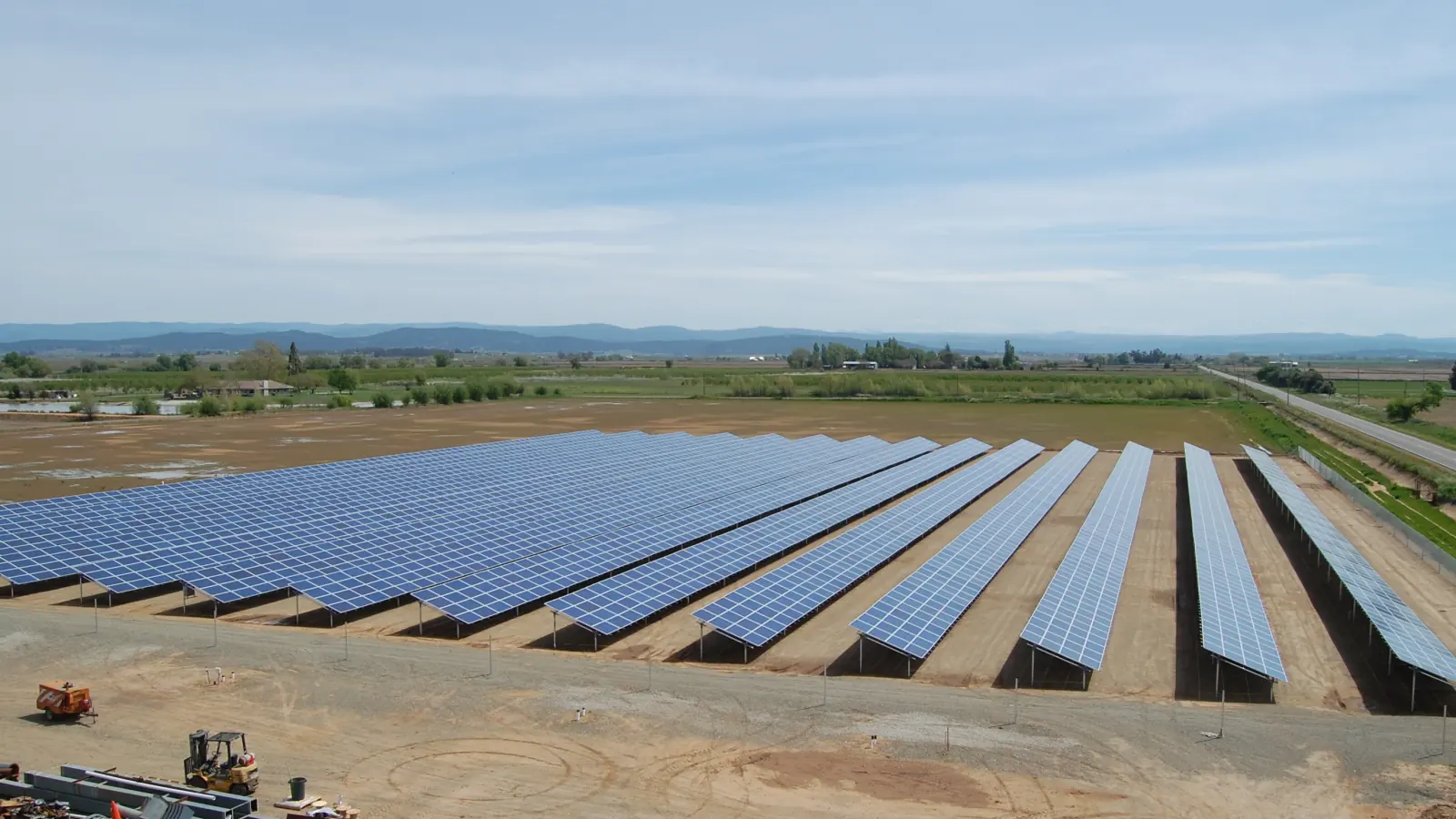

With an on-site solar power purchase agreement (PPA), a company pays for, owns and maintains a solar plant at your business, and you buy the power it produces. The price per kWh is set in the contract, and any yearly increase is written into the contract from the start. California law allows this. Under net billing, power you use on site is usually worth more than power you send to the grid, so the plant should be sized to your daytime use. And for a plant whose construction starts now, the owner can claim the federal tax credit only if the plant is in service by December 31, 2027.
How does an on-site solar PPA work?
A power purchase agreement is a long-term contract to buy electricity. In an on-site solar PPA, the plant sits at your premises: on a building, as a solar carport over a parking lot, or on land next to your site. The US Environmental Protection Agency (EPA) describes the model simply: a third party owns, operates and maintains the system, and you host it and buy its output for an agreed period.
You pay only for what the plant produces, at the contract price per kWh, usually with no upfront cost. Your utility keeps supplying the rest, at night and whenever the plant produces less than you use. So you receive two bills: one from the PPA provider and a smaller one from the utility. The owner, or an investor it works with, takes the tax credits. For a home rather than a business, read solar PPAs for California homes.
Is a solar PPA allowed in California?
Yes. Under California’s Public Utilities Code (sections 218 and 2868), a company that owns a solar system and sells its power is not treated as a utility, on one condition. Each system may serve no more than two other customers, on the parcel where it stands or the parcel right next to it. That is what lets a financing partner own the plant on your site and sell you its power, while your utility goes on supplying the rest.
The net billing rules of the California Public Utilities Commission (CPUC) expect such arrangements: they mention customers who buy, lease or pay a power purchase agreement for a system. The net billing rules described here apply to customers of the three large utilities the CPUC regulates, PG&E, SCE and SDG&E. Smaller utilities have their own tariffs, so if another utility serves your site, check its rules.
How does net billing work for a business?
Since April 15, 2023, new solar customers of PG&E, SCE and SDG&E, businesses included, have joined the net billing tariff that the CPUC adopted in Decision D.22-12-056. The utilities call it the Solar Billing Plan, and it is also known as NEM 3. Your plant’s output is used on site first, so you buy less from the grid. What you do not use at that moment goes to the grid and earns an export credit.
Export credits follow the CPUC’s Avoided Cost Calculator, an estimate of what the grid saves thanks to your exports. There is a value for each hour, averaged across the days of each month, with separate values for weekdays and for weekends and holidays. These values are usually lower than the price you pay for grid power, although they can rise above it on late-summer evenings.
Some details differ from homes. Businesses get no extra export bonus: the adder some homes receive is set at zero for them. A business that joins in the tariff’s first five years locks in nine years of export values, taken from the calculator in force in its interconnection year. You pay your bill every month, while export credits roll over until an annual settlement called the true-up. Every kWh you import also pays the non-bypassable charges, such as the public purpose program charge. And the plant can be sized to your past 12 months of use, or up to 50 percent more if you attest that your use will grow.
So a business that uses most of its power in daylight, such as a factory on day shifts or a cold store, gets the most from a plant. More of each kWh is then used on site, at full value. If much of your use falls in the evening, a battery can store midday output for later. The CPUC notes that storage lets solar customers use or export stored power in the hours when it is worth most. Our guide to home batteries under net billing shows how this works through the day.
| Where the kWh goes | What it is worth | What follows |
|---|---|---|
| Used on site as it is produced | What you would otherwise pay your utility for it | Size the plant to your daytime use |
| Exported to the grid | An export credit at the CPUC’s hourly value, usually below the grid price | A battery can shift it to the evening |
| Bought from the grid | Your utility rate, plus the non-bypassable charges | What the plant and any battery reduce |
For business customers of PG&E, SCE and SDG&E on the net billing tariff, as of November 16, 2026.
Who claims the federal tax credit, and by when?
The plant’s owner does, not you. Under a PPA, that is the provider or its financing partner. For a plant placed in service from 2025, that credit is the clean electricity investment credit, Section 48E of the tax code. The IRS sets it at 6 percent of the qualifying investment. It rises to 30 percent for a plant under 1 megawatt (AC), or for a larger plant that pays prevailing wages and employs registered apprentices. Meeting domestic content rules adds up to 10 percentage points, and so does standing in an energy community, a type of area defined in the law. An owner that cannot use the credit itself can transfer it to another company for cash.
The 2025 federal tax law, Public Law 119-21, added an end date for solar. There is no credit for a plant placed in service after 2027 if its construction began after July 4, 2026. That start date has passed, so a plant whose construction begins now must be in service by December 31, 2027 for its owner to claim the credit. A plant whose construction began by July 4, 2026 is not bound by that deadline. Proving that start is technical: on June 6, 2026 a federal court set aside the IRS notice that had narrowed how it can be shown. So if a provider relies on an earlier start, ask how it was established.
Two more rules came with that law. For plants whose construction began after December 31, 2025, there is no credit if the plant includes material assistance from a prohibited foreign entity. That is a test of where the cost of its equipment comes from, and the IRS set out interim rules for it in Notice 2026-15 in February 2026. The owner itself also cannot be a specified foreign entity or a foreign-influenced entity. Batteries are treated differently: the end-2027 deadline does not apply to energy storage.
These rules decide whether the owner gets the credit, and so can affect the price it offers you. Ask what the price assumes, and read the US solar tax credit in 2026 for the detail. Confirm any tax point that affects your business with your CPA.
How does the plant connect to the grid?
Before the plant can run, your utility must approve its connection under Electric Rule 21. This CPUC tariff sets the interconnection, operating and metering requirements for generators connected to the grids of the utilities the CPUC regulates, and each utility runs its own version. It covers the steps and timeframes for reviewing an application, the fees for processing it and for any impact studies, and how the cost of grid upgrades is shared. Ask the provider who files the application, how long your utility is likely to take, and who pays if the utility requires upgrades.
What should you check in a California PPA?
A PPA runs for many years, so get every point below in writing before you sign. To look up a builder’s license, follow the steps in how to choose a home solar company in California; the same CSLB lookup works for any contractor.
My advice: ask each provider for the price per kWh in every year of the term, escalator included, and judge offers on those numbers, not on the first-year price.
- Term: how many years, and whether they run from signing or from switch-on. The EPA says most solar PPAs run from about six years up to 25.
- Price and escalator: the first-year price per kWh and any yearly increase, written into the contract from the start. The EPA says escalators are often 1 to 5 percent a year. At 3 percent, the price in year 10 is about 30 percent above year 1, and in year 20 about 75 percent above (our calculation).
- Output: the expected yearly production, how it was estimated, how it falls as the plant ages, and what the provider commits to if output falls short.
- Billing: you should pay only for the plant’s metered output, on a meter you can read.
- Tax credit: whether the price assumes the owner claims Section 48E, and what happens to the price if the plant is not in service by December 31, 2027.
- Property tax: California’s exclusion for new solar systems covers only systems completed before January 1, 2027, plus any part already built on January 1, 2026. A plant finished later may be assessed, so ask who would pay any property tax on it.
- Your site: the access the provider needs, insurance, and who pays to remove and refit the plant if the building needs work.
- Moving or selling: whether the contract can pass to a buyer or a new tenant, and what ending early costs.
- End of term: whether you can buy the plant and on what terms, extend the contract or have the plant removed, and who pays for removal.
- The builder: in California, anyone contracting for work that needs a building permit must hold a current license from the Contractors State License Board (CSLB).
PPA, buying or leasing: which suits your business?
The plant can be the same in all three. What changes is who invests, who claims the tax credit and who carries the risk if output falls short.
If your business can invest and can use the credit, buying usually leaves more of the plant’s value with you, because no third party needs a return on it. A PPA moves the investment and the technical risk to the owner, in exchange for paying for each kWh. The EPA notes that a PPA can also mean more complex negotiations than buying outright. Review the accounting and tax treatment of each option with your CPA.
| What differs | Buy | Lease | PPA |
|---|---|---|---|
| Upfront payment | The plant’s cost, from your funds or a loan | Depends on the lease | Usually none |
| Who owns the plant | Your business | The leasing company | The provider or its financing partner |
| What you pay | The plant and its upkeep | A set payment each period | Each kWh the plant produces, at the contract price |
| Federal credit (Section 48E) | Yours to claim or transfer, if the plant qualifies | The leasing company’s, unless it elects to pass it to you | The owner’s |
| Upkeep and repairs | Yours | Depends on the lease | The provider’s |
| If output falls short | You save less | You pay the same | You pay less, since you pay per kWh |
| At the end of the term | The plant is still yours | As the lease sets out | As the contract sets out |
Whichever route you choose, a solar plant whose construction starts now must be in service by December 31, 2027 for anyone to claim the federal credit on it.
How Aeternus helps
Aeternus Power is an independent energy company based in Madrid. We originate, qualify, structure and finance energy projects, solar-led and with storage, and bring in the builders and financing partners for each one. We never own the plants. A commission is paid by whoever builds or finances the project, never by you, and only if the project goes ahead.
We work in Spain, Portugal and Colombia today; in Spain and Portugal, businesses can buy the plant, lease it or, from 50 kWp, take a PPA. Our California office opens on December 1, 2026, and we cannot yet say which of these we will arrange there, or when. If you would like to know, tell us about your site: where it is, which utility serves it and how much power it uses in a year. We reply within two working days and will say plainly whether and when we can help. How we work with businesses is on our business page.
Questions
Can a business sign a solar PPA in California?
Yes. Under Public Utilities Code sections 218 and 2868, a company that owns a solar system and sells its power is not treated as a utility. Each system may serve no more than two other customers, on the same parcel or the one next to it. Your utility still supplies the rest of your power.
Who gets the solar tax credit in a PPA?
The owner of the plant, usually the provider or its financing partner, not the business that buys the power. Ask how the price per kWh reflects the credit, and what happens to the price if the plant does not qualify.
What is the deadline for the commercial solar tax credit?
For a solar plant whose construction began after July 4, 2026, the owner can claim the credit only if the plant is placed in service by December 31, 2027. Plants whose construction began by July 4, 2026 are not bound by that date, and batteries are not subject to it.
Does NEM 3 apply to businesses in California?
Yes. NEM 3 is another name for the net billing tariff, which covers business and home customers of PG&E, SCE and SDG&E who applied to connect a system from April 15, 2023. Businesses get no export adder, and those joining in the tariff’s first five years lock in nine years of export values.
How long does a commercial solar PPA last?
As long as the contract says. The EPA puts most solar PPAs between about six and 25 years. Check whether the term runs from signing or from switch-on, and what happens at the end.
Will a solar plant raise my property taxes in California?
It may. California’s exclusion for new solar systems covers only systems completed before January 1, 2027, plus any part already built on January 1, 2026. Systems already excluded stay excluded until the property changes ownership. For a plant finished later, ask who would pay any property tax.
Sources
- CPUC: Net Energy Metering and Net Billing (net billing tariff since April 15, 2023, export credits, adder for homes only, monthly billing, size limit): https://www.cpuc.ca.gov/industries-and-topics/electrical-energy/demand-side-management/customer-generation/net-energy-metering-and-net-billing
- CPUC Decision D.22-12-056 (December 15, 2022): adopts the net billing tariff, including export values, nine-year lock-in and rules for nonresidential customers: https://docs.cpuc.ca.gov/PublishedDocs/Published/G000/M500/K043/500043682.PDF
- CPUC: California Solar Consumer Protection Guide (Solar Billing Plan, also known as the Net Billing Tariff or NEM 3): https://www.cpuc.ca.gov/industries-and-topics/electrical-energy/demand-side-management/customer-generation/california-solar-consumer-protection-guide
- CPUC: Electric Rule 21, generating facility interconnections: https://www.cpuc.ca.gov/rule21/
- California Public Utilities Code section 218 (independent solar energy producers are not electrical corporations): https://california.public.law/codes/public_utilities_code_section_218
- California Public Utilities Code section 2868 (independent solar energy producer: sale to no more than two other entities per system): https://california.public.law/codes/public_utilities_code_section_2868
- Public Law 119-21 (July 4, 2025), section 70513: termination and restrictions on the clean electricity investment credit (GPO): https://www.govinfo.gov/content/pkg/PLAW-119publ21/html/PLAW-119publ21.htm
- IRS: Clean Electricity Investment Credit, Section 48E (rates, bonuses, direct payment or transfer): https://www.irs.gov/credits-deductions/clean-electricity-investment-credit
- IRS: Instructions for Form 3468 (2025), clean electricity investment credit (end date for solar, plants under 1 MW, foreign entity rules, lessee election): https://www.irs.gov/pub/irs-pdf/i3468.pdf
- IRS IR-2026-23 (February 12, 2026): guidance on material assistance from prohibited foreign entities, Notice 2026-15: https://www.irs.gov/newsroom/treasury-irs-provide-guidance-for-certain-energy-tax-credits-regarding-material-assistance-provided-by-prohibited-foreign-entities-under-the-one-big-beautiful-bill
- IRS: Elective pay and transferability (transfer of a credit to a buyer for cash): https://www.irs.gov/credits-deductions/elective-pay-and-transferability
- US District Court for the District of Columbia, Oregon Environmental Council v. IRS, order of June 6, 2026 vacating IRS Notice 2025-42 (published by the City and County of San Francisco): https://media.api.sf.gov/documents/2026-6-6_ORE_v_IRS_Order.pdf
- California State Board of Equalization, Letter to Assessors 2026/034 (September 1, 2026): solar new construction exclusion inoperative from January 1, 2027: https://www.boe.ca.gov/proptaxes/pdf/lta26034.pdf
- California State Board of Equalization, Letter to Assessors 2024/031 (August 26, 2024): construction in progress and the solar exclusion: https://www.boe.ca.gov/proptaxes/pdf/lta24031.pdf
- CSLB: What kind of contractor do you need? (license required for permitted work): https://www.cslb.ca.gov/consumers/hire_a_contractor/What_Kind_Of_Contractor.aspx
- US Environmental Protection Agency: Solar Power Purchase Agreements (updated April 9, 2026): https://www.epa.gov/green-power-markets/solar-power-purchase-agreements
Latest
How to choose a home solar company in California
Europe’s power prices in early November 2026: from €184/MWh in Spain to €347/MWh in Ireland