Solar for retail chains: one programme for many stores, their car parks and their leases
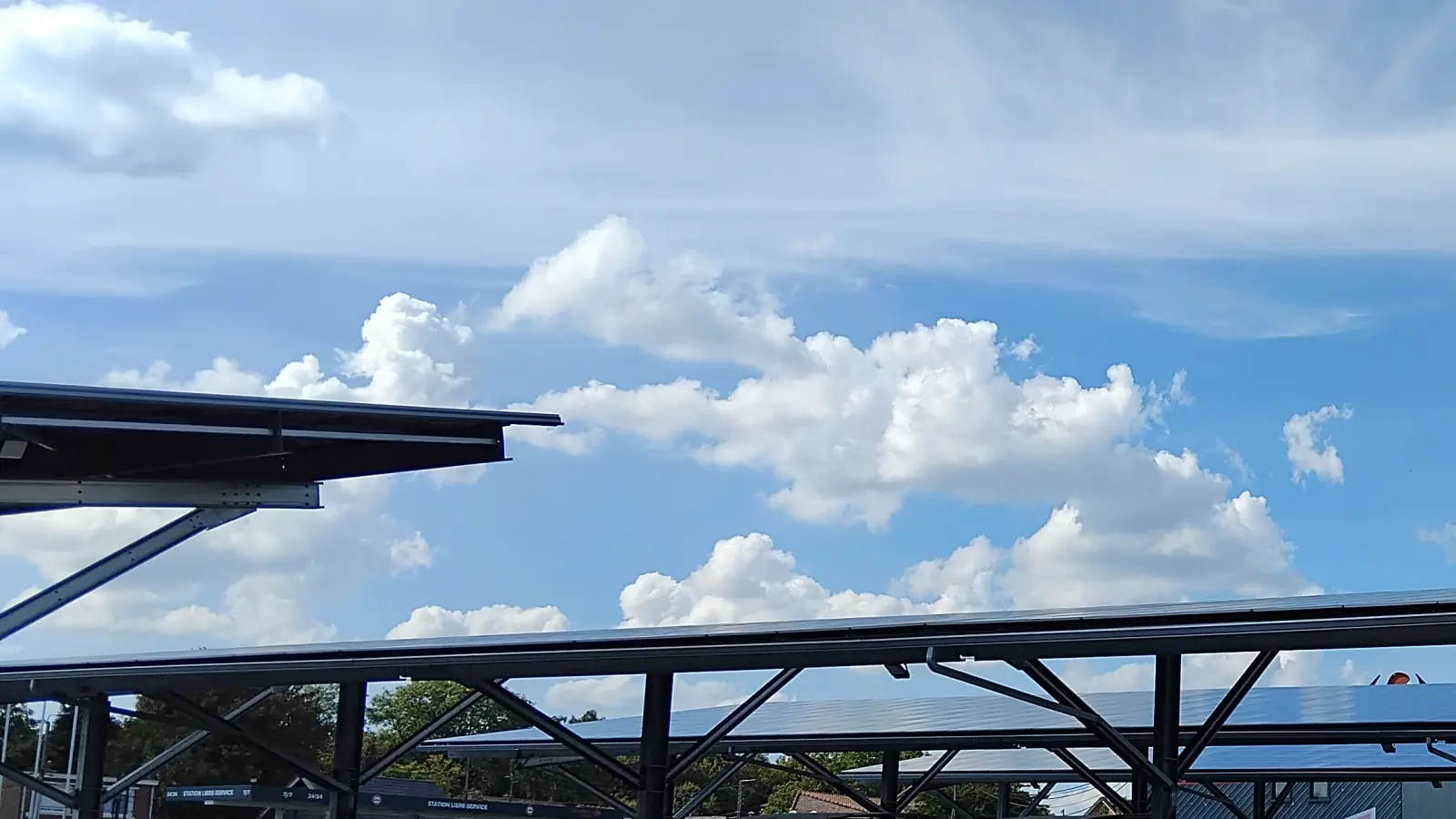

Shops and supermarkets use most of their power in opening hours, much of it in daylight, and a food store’s refrigeration runs day and night. That suits a solar plant on each building or car park. A chain with many similar stores can run them as one programme under one agreement, store by store, with each landlord’s consent.
In short
- Stores use most power in daylight opening hours, and food stores refrigerate around the clock, so a well-sized plant’s output is used in store.
- A chain can run all its stores as one programme, under one framework agreement with a schedule for each store.
- Check each lease and landlord’s consent, the building, the grid connection and what happens to a plant if a store closes.
How do shops and supermarkets use electricity?
It depends on what they sell. In the United States in 2018, food stores used about 574 kWh of electricity per square metre of floor, more than four times the average for commercial buildings, and refrigeration took 48% of it, by our calculation from the US Energy Information Administration’s (EIA) survey of commercial buildings. Other shops used about 147 kWh per square metre, mostly for lighting, ventilation and cooling.
Research for the EU Joint Research Centre found the same pattern in Europe: in food retail, refrigeration takes about half of the final energy used in stores (2013).
Use follows opening hours: lights, checkouts and ventilation while the doors are open, and cooling on hot afternoons. Refrigeration runs day and night, every day, so a supermarket’s use never drops to zero.
| Type of building | Electricity per m² a year | Refrigeration | Lighting | Cooling and ventilation |
|---|---|---|---|---|
| Food stores | 574 kWh | 48% | 7% | 11% |
| Other shops outside malls | 147 kWh | 7% | 25% | 38% |
| Shopping malls and strip centres | 211 kWh | 15% | 21% | 26% |
| All commercial buildings | 136 kWh | 9% | 17% | 32% |
Food stores include grocery and convenience stores. The figures describe the United States.
How much of a store’s use can a plant cover?
Opening hours suit solar. In 2023, between 93% and 99% of a plant’s output near Milan, Lisbon, Madrid or Fresno in California came between 9:00 and 21:00 local time, by our calculation from PVGIS, the EU Joint Research Centre’s solar data tool (modules tilted at 10 degrees, facing south).
How much of the store’s use it covers depends on space. A square metre of modules produces about 230 to 340 kWh a year at those four places, by our calculation with the module efficiencies of 19% to 21% used in the System Advisor Model of the US National Renewable Energy Laboratory (NREL). Against the table above, for a store on one floor:
- A food store uses so much per square metre that modules over its entire building would cover only about 40% to 60% of its yearly use. Canopies over the car park add space.
- Other shops use less: modules over the entire building would produce about 1.6 to 2.3 times what the store uses in a year, much of it when the store does not need it. Size the plant to the store’s daytime use.
Sundays carried between 14% and 15% of the plants’ output in 2023. A store closed on Sundays sends much of it to the grid, while a supermarket’s refrigeration uses part of it. Each market pays for power sent to the grid in its own way: see the region pages below.
How can a chain treat many stores as one programme?
Stores of one format look alike and use power in similar ways, so the figures of one help to size the next. A chain can plan all its sites as one programme instead of many separate projects:
- A standard design for each store format, adjusted to each building and its consumption.
- One framework agreement with common terms for building, maintenance and payment, and a schedule for each store with its plant, expected output and price.
- Work in phases, starting with the stores that use the most power, have the most suitable buildings and the longest time left on their leases.
- One view of every plant’s output, to spot faults and compare stores.
- A way to pay for each store: buy the plant where you own the building, lease it at small stores, or sign a power purchase agreement (PPA) from 50 kWp (kilowatts peak, the plant’s rated power). In a PPA, a financing partner pays for, owns and maintains the plant, and the store pays only for the power it supplies, at a price per kWh set in the contract. That price starts below what the store pays for grid power when it signs, and any yearly increase is written into the contract from the start.
Buying and leasing work at any size. What is a PPA? explains the contract. Tax rules differ by country: see tax benefits of a solar PPA, and confirm them with your tax adviser.
What should you check at each store, especially a leased one?
Many stores are rented, and the owner of the building decides what goes on it. Settle these points store by store:
- The landlord’s written consent, and who owns the plant, who insures it and who pays to remove and refit it if the building needs repairs.
- The lease: the contract for the plant should not outlast it without a plan for that day. Agree in the framework what happens if a store closes or moves: the next occupant takes the contract over, the plant moves to another store, or you buy it out.
- The building: its structure, how many years the roofing has left, and access for maintenance and firefighting, with a design your insurer has seen.
- Shared buildings. In a shopping centre, the landlord usually controls the roofing. In the EU, self-consumers in the same building are entitled to share the power of a plant on their site. In the United States, whether anyone other than the utility may sell power to a store depends on the state: see where solar PPAs are allowed.
- The grid connection: how much the local network can take, how long approval takes and whether exports are limited.
Can the car park carry a plant and charge electric cars?
Yes. Canopies over parking spaces add space without loading the building, shade the cars and can carry charging points. Charging during the day uses more of the plant’s output on site, but the charging points also add to the site’s peak demand, so plan them with the plant. The Spanish guide to car-park canopies covers their structure and permits.
In the EU, car parks are part of building law. Under the Energy Performance of Buildings Directive (EU) 2024/1275, member states must ensure that by 1 January 2027 every non-residential building with more than 20 parking spaces has at least one charging point for every 10 spaces, or ducting for at least half of them. The same directive requires solar installations, where technically suitable and economically and functionally feasible, on existing non-residential buildings over 500 m² that undergo a major renovation or works needing a permit by 31 December 2027, and on new covered car parks next to buildings by 31 December 2029. Member states had until 29 May 2026 to bring it into national law, which sets the details: check yours.
When does a battery pay in a store?
A battery stores midday output and gives it back later, with some loss: the large batteries on the US grid returned about 82% of what they stored in 2019, according to the EIA. In a store it can pay in three cases:
- The plant produces more at midday than the store uses, that surplus earns little, and evening power costs much more.
- The tariff charges for the highest power drawn, as the US demand charge does, and the battery trims the peaks of cooling on hot afternoons. Across the United States, summer demand peaks around 17:00 or 18:00, says the EIA, and high demand charges are often cited as a critical factor in whether a battery pays (NREL, 2017).
- Refrigeration must keep running in a power cut. A plant connected to the grid switches off when the grid fails, for safety, so backup needs a battery and equipment designed to run isolated from the grid.
A battery rarely pays when the store already uses nearly all of the plant’s output as it comes, or when evening and midday power cost about the same.
Your market
Rules on self-consumption, exports and grants are set by each country, and in the United States by each state. Read the page for your market:
- Spain: autoconsumo para cadenas de retail, in Spanish.
- Portugal: commercial solar in Portugal, with the rules, the registration and what surplus earns.
- United States: commercial solar in the United States, with prices, export rules and tax, state by state.
- Colombia: commercial solar in Colombia, with the self-generation rules, surplus credits and tax incentives.
- Prices across Europe: business electricity prices in the EU in 2026.
How Aeternus helps
Aeternus Power is an independent energy company. We originate, qualify, structure and finance energy projects, solar-led and with storage: we study a year of consumption for each store, its building and its lease, size each plant to its store, and bring in vetted builders and the financing partner for the whole programme. We never own the plants. A commission is paid by whoever builds or finances the project, never by you, and only when the project goes ahead.
We work with businesses in Spain, Portugal and Colombia today; in Spain and Portugal you can buy the plant, lease it or, from 50 kWp, take a PPA. Our office in California opens on 1 December 2026, and we cannot yet say which of these we will arrange there. For a first figure, use the preview on our business page, or tell us about your stores: we reply within two working days.
Questions
Is solar worth it for a supermarket?
Supermarkets suit solar well: refrigeration runs every day and opening hours fall mostly in daylight, so most of a well-sized plant’s output is used in store. Whether it pays depends on your power price, the building, the lease and the way you pay. A year of hourly meter readings answers the question for each store.
Can a retail chain sign one solar contract for all its stores?
Yes. It can be structured as a framework agreement with common terms and a schedule for each store, with its plant, expected output and price. Stores can join in phases, and the agreement says what happens if one closes.
Can I put solar on a store I rent?
Yes, with the landlord’s written consent. Agree who owns the plant, who pays to remove and refit it if the building needs repairs, and what happens when your lease ends. A PPA or a lease of the plant should not run past your lease without a plan for that day.
What happens to a store’s solar plant if the store closes?
It depends on the contract. The usual options are that the next occupant takes it over, the plant moves to another store, or you buy it out. Write the choice into the framework agreement before you sign.
Do car parks in the EU need charging points for electric cars?
From 1 January 2027, the Energy Performance of Buildings Directive requires member states to ensure that non-residential buildings with more than 20 parking spaces have at least one charging point for every 10 spaces, or ducting for at least half of them. National law sets the details and any exemptions.
Sources
- US Energy Information Administration: 2018 Commercial Buildings Energy Consumption Survey, tables C22 and E5, electricity use by building activity and end use (December 2022): https://www.eia.gov/consumption/commercial/data/2018/index.php?view=consumption
- EUR-Lex: Directive (EU) 2024/1275 on the energy performance of buildings, articles 10, 14 and 35 (24 April 2024): https://eur-lex.europa.eu/legal-content/EN/TXT/?uri=CELEX:32024L1275
- EUR-Lex: Directive (EU) 2018/2001 on renewable energy, consolidated text of 16 July 2024, article 21 on renewables self-consumers: https://eur-lex.europa.eu/legal-content/EN/TXT/HTML/?uri=CELEX:02018L2001-20240716
- EU Joint Research Centre: identified best environmental management practices to improve the energy performance of the retail trade sector in Europe, Energy Policy (2013): https://publications.jrc.ec.europa.eu/repository/handle/JRC85847
- EU Joint Research Centre: PVGIS 5.3, hourly and monthly output of a solar plant (data for 2005 to 2023): https://re.jrc.ec.europa.eu/pvg_tools/en/
- National Renewable Energy Laboratory: System Advisor Model help, PVWatts system design and module types: https://samrepo.nlr.gov/help/pvwatts_system_design.html
- US Energy Information Administration: hourly electricity consumption varies throughout the day and across seasons (21 February 2020): https://www.eia.gov/todayinenergy/detail.php?id=42915
- US Energy Information Administration: utility-scale batteries and pumped storage return about 80% of the electricity they store (12 February 2021): https://www.eia.gov/todayinenergy/detail.php?id=46756
- NREL and Clean Energy Group: identifying potential markets for behind-the-meter battery storage, a survey of US demand charges (August 2017): https://www.osti.gov/biblio/1374803
- Southern California Edison: solar technology FAQs, outages and grid-tied systems: https://www.sce.com/customer-service-center/help-center/solar/getting-started-with-solar/solar-technology-faqs
Latest
Europe’s power prices in early November 2026: from €184/MWh in Spain to €347/MWh in Ireland