Serbian businesses paid the Western Balkans’ highest power prices in early 2026: what to budget for in 2027
By Fabio-Massimo Querrioux, Founder & CEO
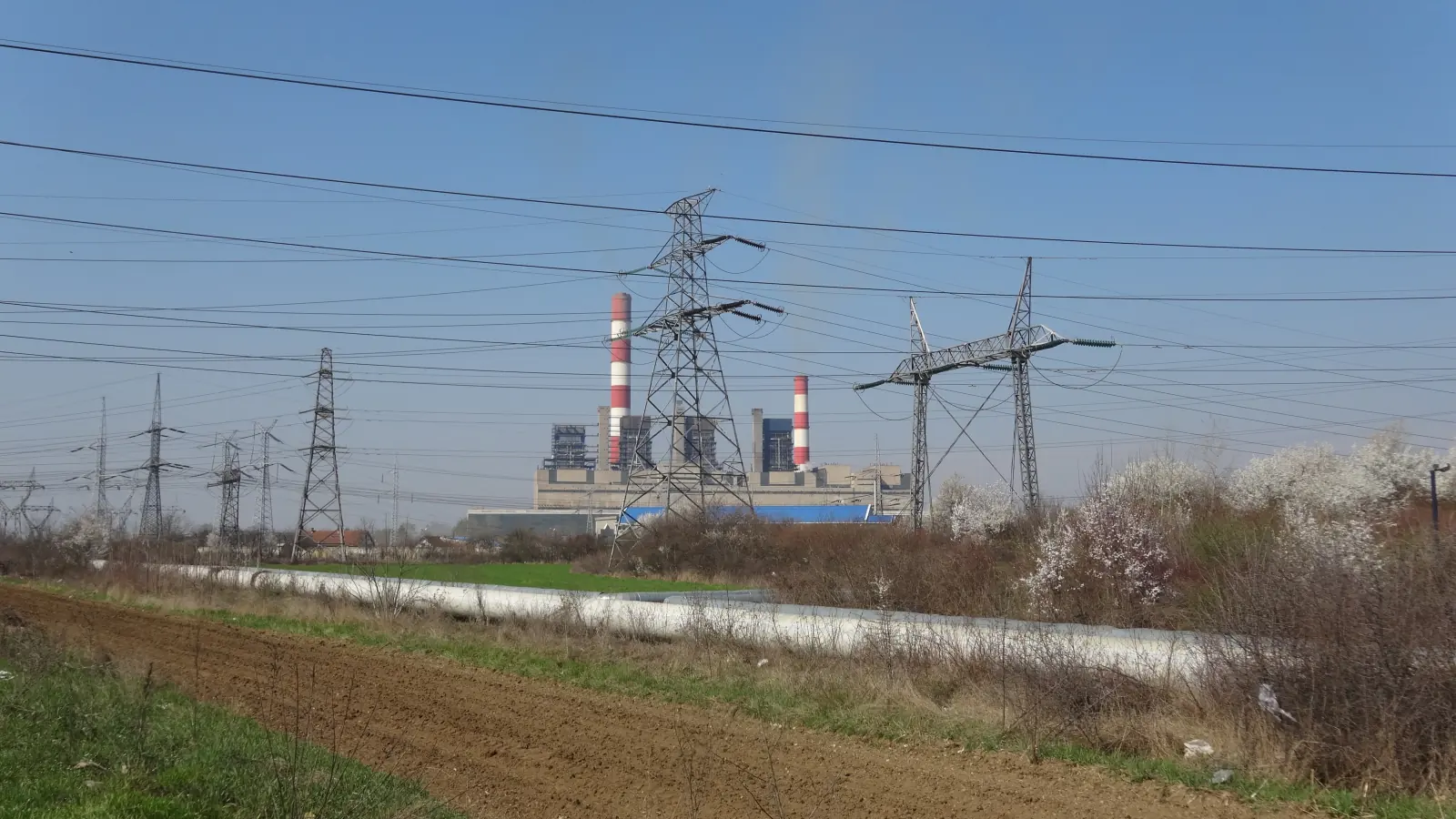

In the first half of 2026, Serbian businesses using 500 to 2,000 MWh a year paid €0.1528 per kWh before VAT and other recoverable taxes, the highest price among the Western Balkan countries in Eurostat’s data; the EU average was €0.18. In October, imports met 26% of Serbia’s consumption and cost the state utility more than €7 million a day, and an energy expert expects prices to rise in 2027. Here is what to budget for, and how a business can make its own power.
What businesses paid in the first half of 2026
Eurostat, the EU statistics office, publishes the electricity prices paid by businesses that use 500 to 2,000 MWh a year. Serbia’s price was about 8% higher than a year earlier, by our calculation from Eurostat data, while the EU average fell 5.4%. Of the other former Yugoslav countries in the data, only Croatia paid more.
| Market | € per kWh |
|---|---|
| Croatia | 0.1610 |
| Serbia | 0.1528 |
| Slovenia | 0.1463 |
| Albania | 0.1337 |
| Bosnia and Herzegovina | 0.1186 |
| North Macedonia | 0.1183 |
| Montenegro | 0.0892 |
| EU average | 0.1800 |
Prices before VAT and other recoverable taxes: what businesses pay, not wholesale market prices. Albania’s figure is a Eurostat estimate. Our calculation sets Serbia’s €0.1411 per kWh in the first half of 2025 against €0.1528 a year later.
Why 2027 could cost more
Elektroprivreda Srbije (EPS), the state utility, cannot cover demand this year. In October, imports met 26% of consumption on average and cost EPS more than €7 million a day, energy expert Željko Marković of the association Savez energetičara said in early November 2026. He blamed a drought that cut hydropower in the second half of the year, coal problems at the Kolubara mine and a low Danube that held up coal barges.
Because EPS agreed many of its sale prices earlier, below today’s market, it needs about €300 million to buy power until the end of the year, he said, and it has taken out an extra loan. He expects prices to rise in 2027 and told businesses on commercial contracts to allow for it in their budgets.
On 16 October 2026, baseload power for 2027 on the Hungarian market, the price reference for the former Yugoslav countries, traded at €169.78/MWh on the EEX exchange, according to an analysis by Aleksander Mervar, the long-time head of Slovenia’s grid operator ELES. Futures show what the market expects today; they are not a forecast. Our article on Europe’s 2026 power price spike explains what has moved prices this year.
The regulated price: promised to the IMF, not yet set
Households and small customers can buy at regulated prices approved by the energy regulator, AERS, under what Serbia calls guaranteed supply. Since 1 October 2025, entrepreneurs and micro and small companies can too, whatever their consumption, EPS said at the time; on that date the regulated price rose 6.6% on average.
Under its programme with the International Monetary Fund (IMF), the government promised in June 2026 to propose a new indexation, inflation plus one percentage point, by the end of the year, the daily Danas reported on 31 August; EPS had not yet asked AERS for it. As of 17 November 2026, AERS had announced no new regulated price.
What to budget for in 2027
On a commercial contract, your next price will reflect the market on the day you sign, so ask for offers early and judge them against your own consumption. On regulated prices, plan for a rise of at least inflation plus one point once the government acts. Whatever your contract, every kWh a plant at your site supplies is one you do not buy from the grid.
My advice: before you sign a supply contract for 2027 or ask anyone about a plant, get a year of 15-minute consumption data and your approved connection capacity, because together they show what to buy and how large a plant your site can take.
Producing your own power: two routes
Serbian law offers a business two routes, and the size of the plant decides which applies. On both, the plant cannot exceed the site’s approved connection capacity, the power the site may draw from the grid.
Up to 150 kW, a business can register as a prosumer (kupac-proizvođač) under the Law on the Use of Renewable Energy Sources: it uses the plant’s power first and sends the surplus to the grid, settled with its supplier. From 150 kW, it applies to become an active customer (aktivni kupac), a status added to the Law on Energy in 2024, which can use and store its own power and sell the surplus, including under a power purchase agreement (PPA), a long-term contract for electricity explained in our guide to what a PPA is.
| Aspect | Prosumer | Active customer |
|---|---|---|
| Plant size | Up to 150 kW | 150 kW or more |
| Upper limit | The site’s approved connection capacity | The site’s approved connection capacity |
| Power you do not use | Goes to the grid and is settled with your supplier | Sold under a contract, such as a PPA, or not exported at all |
| Power fed in and taken out | Netted under your supply contract | Billed separately |
| Imbalances | Your supplier takes them on | Your responsibility, directly or through a supplier or aggregator |
| How to apply | The prosumer procedure at your distribution company | A connection study, requested from 1 January to 1 February or from 1 July to 1 August, or at any time if the plant never exports |
Reports in 2026 differed on whether companies below 150 kW can still register as prosumers: Biznis.rs wrote in March that they could not, but the distribution company still publishes a prosumer procedure for non-household sites up to 50 kW, and a NALED workshop in August placed sites below 150 kW in the prosumer category. Ask the distribution company before you plan.
Net metering ends for new requests after 2026
Net metering lets a prosumer’s surplus in one month reduce what it pays for in the next. Under Article 131 of the 2024 amendments to the Law on Energy, it applies until 31 December 2026 at the latest, except for prosumers who file their request to adapt the metering point by that date. In March 2026 the Ministry of Mining and Energy confirmed that households filing by then keep it, according to Biznis.rs.
New household prosumers after that move to net billing, in which each month’s surplus is valued in money under the supply contract; its detailed rules had not been adopted by March 2026. Business prosumers already use net billing, according to Balkan Green Energy News.
How to start
Becoming an active customer takes a connection study, permits, contracts and a trial run before final registration, explains a 2026 guide by NALED, Serbia’s National Alliance for Local Economic Development. In practice:
- Ask Elektrodistribucija Srbije (EDS), the distribution company, for your approved connection capacity and which route your site falls under.
- Collect 12 to 24 months of bills and 15-minute or hourly consumption data.
- Decide whether the plant will export. An active customer that exports requests a connection study from 1 January to 1 February or from 1 July to 1 August; one that never exports can apply at any time and gets its study within 60 days. The fee is €3,000 for a plant up to 1 MW.
- Plan for permits: under a rule published in Official Gazette no. 16/2026, a plant above 10.8 kW built for own use needs a works approval (rešenje o odobrenju za izvođenje radova). The threshold used to be 50 kW.
- Decide who owns the plant: an active customer may have a third party build, own and run it, and that party then also signs the connection contract.
How Aeternus helps
Aeternus Power is an independent energy company based in Madrid. We originate, qualify, structure and finance energy projects, solar-led and often with storage, with vetted builders and financing partners. We are expanding into the Balkans, with talks under way in Serbia and Croatia with financing partners, builders and buyers for the power.
We never own plants: the builder or financing partner pays us a commission, never you, and only if a project goes ahead. If your business in Serbia is weighing a plant, contact us with a year of bills; we reply within two working days. Our business page shows how we work in Spain and Portugal.
Questions
Why is electricity so expensive for businesses in Serbia?
Serbian businesses using 500 to 2,000 MWh a year paid €0.1528 per kWh before VAT and other recoverable taxes in the first half of 2026, the highest in the Western Balkans in Eurostat’s data. EPS has also had to import 26% of consumption in October, after a drought and coal problems.
Will electricity prices in Serbia go up in 2027?
Nobody can say for sure. An energy expert expects a rise and advises businesses on commercial contracts to budget for it, and the regulated price is due an indexation promised to the IMF, not yet set as of 17 November 2026.
Can a company in Serbia install a solar plant for its own use?
Yes. Up to 150 kW it can register as a prosumer; from 150 kW it applies to become an active customer. Either way the plant cannot exceed the site’s approved connection capacity, and above 10.8 kW it needs a works approval.
What is an active customer (aktivni kupac) in Serbia?
A customer that uses, stores or sells power produced at its own site, without that being its main business. It needs a plant of at least 150 kW, answers for its own imbalances, can sell surplus under a PPA and may have a third party own the plant.
Is net metering ending in Serbia?
For new requests, yes: it applies until 31 December 2026 at the latest, and prosumers who file their request to adapt the metering point by then keep it. Business prosumers already use net billing.
Sources
- Eurostat: electricity prices for non-household consumers, bi-annual data (nrg_pc_205), band 500 to 1,999 MWh, excluding VAT and other recoverable taxes, 2025 and first half of 2026 (data updated 19 October 2026): https://ec.europa.eu/eurostat/databrowser/view/nrg_pc_205/default/table?lang=en
- Law on Energy (Zakon o energetici), consolidated text: Article 2, Article 171 on balance responsibility, Articles 210g and 210d on active customers, and Article 131 of the 2024 amending law (Službeni glasnik RS 94/2024) on net metering (Paragraf, in Serbian): https://www.paragraf.rs/propisi/zakon_o_energetici.html
- Law on the Use of Renewable Energy Sources (Zakon o korišćenju obnovljivih izvora energije), consolidated text: Article 2, definitions of net metering and net billing, and Articles 58 and 59 on prosumers (Paragraf, in Serbian): https://www.paragraf.rs/propisi/zakon-o-koriscenju-obnovljivih-izvora-energije.html
- Regulation on the conditions of delivery and supply of electricity, consolidated text up to Službeni glasnik RS 81/2026: Articles 10a, 25b and 25d on active customers (Paragraf, in Serbian, PDF): https://www.paragraf.rs/propisi_download/uredba_o_uslovima_isporuke_i_snabdevanja_elektricnom_energijom.pdf
- Elektrodistribucija Srbije: connection procedure for active customers, conditions and application windows (in Serbian): https://elektrodistribucija.rs/usluge/postupak-prikljucenja-na-dsee/aktivni_kupac
- Elektrodistribucija Srbije: prosumer procedure for non-household sites from 10.8 to 50 kW (in Serbian): https://elektrodistribucija.rs/usluge/postupak-prikljucenja-na-dsee/postupak-sticanja-statusa-kupca-proizvodjaca/objekti_koji_nisu_domacinstva
- AERS, Energy Agency of the Republic of Serbia: news and decisions (checked 17 November 2026, in Serbian): https://www.aers.rs/vesti
- Serbia Energy (14 November 2026): Serbia records Western Balkans’ highest industrial electricity prices in first half: https://serbia-energy.eu/serbia-records-western-balkans-highest-industrial-electricity-prices-in-first-half/
- 021.rs, from Biznis.rs (8 November 2026): Marković, electricity will have to rise in price in 2027 (in Serbian): https://www.021.rs/info/biznis-i-ekonomija/460755/markovic-struja-ce-morati-da-poskupi-u-2027-godini
- Balkan Green Energy News (12 November 2026): Mervar’s analysis of 2027 baseload prices on EEX for the Hungarian market (in Serbian): https://balkangreenenergynews.com/rs/firme-koje-nisu-kupile-struju-na-vreme-neka-se-spreme-da-je-plate-milione-evra-skuplje/
- Danas (31 August 2026): the electricity price rise waits for the elections, with the IMF commitments and formula (in Serbian): https://www.danas.rs/vesti/ekonomija/poskupljenje-struje-izbori/
- Balkan Green Energy News (29 August 2025): regulated prices up 6.6% from 1 October 2025, and small businesses allowed on guaranteed supply (in Serbian): https://balkangreenenergynews.com/rs/struja-poskupljuje-66-odsto-u-srbiji/
- Paragraf, from Biznis.rs (2 April 2026): the ministry’s reading of Article 131, net metering for requests filed by 31 December 2026, works approvals above 10.8 kW, and companies and prosumer status (in Serbian): https://paragraf.rs/dnevne-vesti/020426/020426-vest3.html
- Balkan Green Energy News (27 November 2024): Serbia adopts amendments to the Law on Energy, with active customers and the end of net metering (in Serbian): https://balkangreenenergynews.com/rs/srbija-usvojila-izmene-zakona-o-energetici-stizu-aktivan-kupac-dinamicne-tarife-trziste-pomocnih-usluga
- NALED (2026): guide for active electricity customers, summary (in Serbian, PDF): https://naled.rs/htdocs/Files/21548/Vodic-za-aktivnog-kupca_Rezime-WEB.pdf
- NALED (21 August 2026): how to become an active electricity customer, and the 150 kW threshold: https://naled.rs/en/vest-kako-da-postanete-aktivni-kupac-elektricne-energije-i-koje-su-prednosti-12477
Latest
Europe’s power prices in early November 2026: from €184/MWh in Spain to €347/MWh in Ireland
Europe enters winter with its lowest gas stocks since 2013: what it means for your power bill