Europe enters winter with its lowest gas stocks since 2013: what it means for your power bill
By Fabio-Massimo Querrioux, Founder & CEO
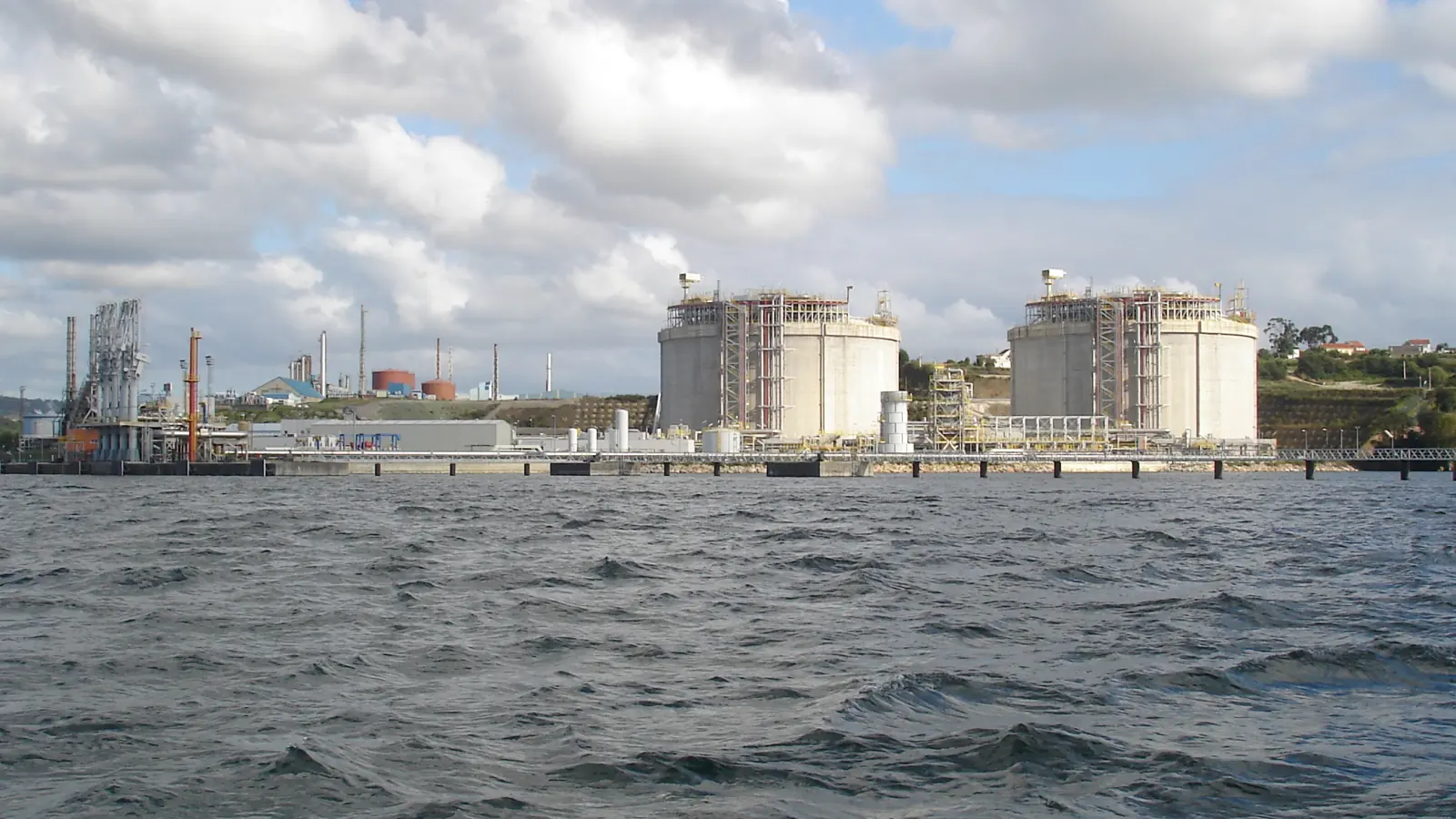

The EU’s gas stores were 72% full on 1 October 2026, against 83% a year earlier, according to ENTSOG, the association of Europe’s gas grid operators, and the International Energy Agency (IEA) says they entered the heating season at their lowest level since 2013. Gas plants cover much of Europe’s power demand at peak hours and when wind and sun are weak, so the coming months matter for business power bills. Here is what the official outlooks say about the winter until March 2027, and what you can do now.
In short
- EU gas stores began the winter 72% full, the lowest since 2013, while gas tankers have all but stopped using the Strait of Hormuz.
- Gas plants cover much of winter power demand, so tight gas can raise indexed bills and the prices offered when contracts renew.
- Check your contract type and renewal date now; for later winters, consider producing part of your power at your site.
Where Europe’s gas stocks stand
ENTSOG reports that underground gas storage in the EU held about 811 TWh on 1 October 2026, 72% of its working capacity, against 83%, about 940 TWh, a year earlier. Stores had fallen to 28% by 1 April 2026, after a colder winter, and ENTSOG describes the refill season that followed as challenging.
Levels vary widely by country. In Germany, which has the most storage capacity in the EU, stores were 57.3% full in the Bundesnetzagentur’s report of 17 November 2026, against about 75% at the same point last year in the regulator’s data. It still rates the risk of a tight gas supply as low, but expects a relatively low level at the end of the winter.
| Country | Filled |
|---|---|
| EU average | 72% |
| Germany | 58% |
| Netherlands | 59% |
| Austria | 68% |
| Hungary | 74% |
| Spain | 75% |
| Bulgaria | 78% |
| Romania | 82% |
| France | 84% |
| Italy | 87% |
| Croatia | 88% |
| Serbia | 88% |
| Portugal | 94% |
Working capacity is the gas a store can hold and release. A percentage does not show how many weeks of demand a store covers: when full, Spain’s stores hold about 36 TWh and Germany’s about 248 TWh.
Why stocks are low: LNG and the Strait of Hormuz
Europe relies heavily on liquefied natural gas (LNG), shipped by tanker: in ENTSOG’s central case it supplies about 40% of Europe’s gas this winter, and Norway about 27%. Since the war in Iran began at the end of February 2026, LNG flows through the Strait of Hormuz have effectively halted, the IEA says, cutting loadings from Qatar and the United Arab Emirates by more than 60 billion cubic metres between March and October.
The EU bought only about 8% of its LNG from Qatar in 2025, according to ENTSOG, but it now competes with Asia for the cargoes left, and the IEA says European and Asian gas prices have reached their highest level since the gas crisis of 2022 and 2023.
The EU has also eased its refill rule. Under Regulation (EU) 2025/1733, the target of 90% full stays, but each country may reach it at any point between 1 October and 1 December and, in difficult conditions such as high prices, fall short by up to 10 percentage points. These rules apply until the end of 2027.
Why gas stocks matter for your power bill
In Europe’s day-ahead power markets, the price for each hour is set where supply and demand meet: offers are accepted from the cheapest up, and the last one needed sets the price, as OMIE, the Iberian market operator, explains. Gas plants are key to covering demand at peak hours and when wind and solar output is low, especially in winter, ENTSO-E, the association of Europe’s electricity grid operators, notes in ENTSOG’s outlook. So the gas price reaches the power price in many hours.
ENTSO-E’s Winter Outlook, published on 13 November, estimates that in the hardest winter scenarios power plants would need at least 416 TWh of gas to keep electricity supply secure, around a third of the EU’s storage capacity, with demand peaking in December and at the end of January. Hydro reservoirs are also lower than usual after an exceptionally dry summer, it adds, which leaves less hydropower to fall back on.
The IEA warns that low stocks could sharpen competition for flexible LNG cargoes and push up prices, especially when demand is high. How gas has shown up in power prices this autumn, and why Spain and Portugal pay less than Germany, is in our article on Europe’s 2026 power price spike.
What ENTSOG’s outlook says about March 2027
ENTSOG modelled the winter from 1 October 2026 to 31 March 2027 under different weather and LNG supply, with Russian pipeline gas kept to a minimum. In a normal winter, demand is met: storage ends the winter at about 29% if LNG arrives as in recent years, and at about 13% if 20% less LNG reaches Europe. In a cold winter, part of demand might have to be cut by users who react to high prices, or go unserved.
ENTSOG adds that landlocked countries in central, eastern and south-eastern Europe could find it harder to secure enough LNG. Its outlooks, it stresses, are not forecasts.
| Scenario | EU storage left | Demand cut or unserved |
|---|---|---|
| Normal winter, LNG as in recent years | 29% | None |
| Normal winter, 20% less LNG | 13% | None |
| Cold winter, LNG as in recent years | 11% | About 7% |
| Cold winter, 20% less LNG | 11% | About 12% |
ENTSOG’s LNG Optimal case follows recent years; its LNG Tight case has 20% less LNG for Europe. 11% is the level of strategic reserves, which are not freely available on the market.
What the market expects for 2027
A low end of winter would make next summer harder too. Starting from 13%, ENTSOG finds that storage could be refilled only to about 80% by the end of September 2027 with LNG as in recent years, short of the 90% target, and the IEA says the extra refilling could keep markets tight well into 2027.
Futures show what the market expects today; they are not a forecast. On 16 November 2026, OMIP, the Iberian futures exchange, priced gas delivered in Spain at €82.70/MWh for December, €81.10/MWh for the first quarter of 2027, €66.05/MWh for the whole of 2027 and €39.99/MWh for 2028. Across 2025, Spain’s day-ahead gas index averaged about €36/MWh, by our calculation from MIBGAS data.
What it means for your contract
With an indexed contract, your energy price follows the day-ahead market, plus your supplier’s costs and margin, so a cold or windless week reaches your next bill, most of all at peak hours. With a price agreed for the term, nothing changes until it renews, but offers made then reflect futures, which for gas stay well above 2025 levels for the whole of 2027.
My advice: check this week whether your power contract is indexed or at an agreed price, and when it renews, because that decides how much of this winter’s gas price reaches your bill.
What a business can do this winter
The steps that help most this winter need no building work:
- Get a year of hourly or 15-minute consumption data from your distribution company and see how much power you buy after sunset.
- On an indexed contract, move what can move, such as cooling, pumping, compressors or battery charging, to the middle of the day. In Spain, from 1 to 16 November 2026, power between 18:00 and 22:00 cost about two and a half times as much as between 12:00 and 15:00, by our calculation from OMIE data.
- If your contract renews before spring, ask for offers early and judge them on your own consumption, not on a headline price per kWh.
Protecting the winters after this one
A new plant at your site will not run this winter: study, permits and works take months. It protects the winters after, because every kWh your own plant supplies is one you do not buy from the grid. Buying or leasing a plant works at any size, and a battery can carry part of the midday output into the evening, as our guides to commercial solar in Spain and battery storage explain.
From 50 kWp, a power purchase agreement (PPA) lets a financing partner pay for, own and maintain the plant at your site, with nothing upfront, while you pay only for the kWh it supplies. The price per kWh is set in the contract and any yearly increase is written into the contract from the start, so it does not move with gas. In a project we have under study, an agri-food business in Castilla-La Mancha that pays the grid about €0.15 per kWh would pay about €0.11 per kWh with a PPA. Our guides explain what a PPA is and how a solar PPA works in Spain.
How Aeternus helps
Aeternus Power is an independent energy company based in Madrid, working in Spain and Portugal, with talks under way in Serbia and Croatia. We originate, qualify, structure and finance energy projects, solar-led and often with storage: we work out what your site can produce and the best way to pay for it, bring in a vetted builder and the financing, and oversee the work.
We never own the plants. The builder or financing partner pays us a commission, never you, and only when a project goes ahead. Our business page explains how we work, or contact us with a recent bill: we reply within two working days.
Questions
Why is gas storage so low in Europe in 2026?
Stores ended last winter at 28% after a colder season, and refilling them was hard: LNG through the Strait of Hormuz all but stopped and prices rose. On 1 October 2026 they were 72% full, and the IEA says EU stocks entered the winter at their lowest level since 2013.
Will Europe run out of gas this winter?
ENTSOG finds that Europe’s gas system can meet demand in a normal winter. In a cold winter, about 7% to 12% of demand might have to be cut by users who react to high prices, or go unserved. On 17 November 2026, Germany’s regulator rated the risk of a tight supply as low.
How do gas prices affect electricity prices?
In each hour, the dearest plant needed to meet demand sets the day-ahead power price, and in winter that is often a gas plant, at peak hours and when wind and sun are weak. When gas costs more, those hours cost more.
Will electricity prices go down in 2027?
Nobody knows. On 16 November 2026, gas futures for Spain were lower for 2027 as a whole than for this winter, and lower again for 2028, but futures show what the market expects today, not a forecast.
Should a business sign an agreed-price electricity contract now?
That depends on when you use power and how much price movement you can absorb. A price agreed now reflects today’s futures; an indexed contract passes on the market as it moves. Judge both on your own hourly data.
Does a PPA protect a business from gas prices?
For the power the plant supplies, yes: the price is set in the contract and any yearly increase is written into it from the start. Power the plant does not cover still comes from your supplier. See what a PPA is.
Sources
- ENTSOG: Winter Supply Outlook 2026/27 with Summer 2027 overview (October 2026): https://www.entsog.eu/sites/default/files/2026-10/SO0072-26_Winter%20Supply%20Outlook%202026-27.pdf
- ENTSO-E: Winter Outlook 2026-2027 report, including the critical gas volume for power generation (13 November 2026): https://eepublicdownloads.entsoe.eu/clean-documents/sdc-documents/seasonal/WOR2026/Winter%20Outlook%202026-2027_Report.pdf
- International Energy Agency (3 November 2026): low storage buffers in Europe could prolong global gas market tightness well into 2027: https://www.iea.org/news/low-storage-buffers-in-europe-could-prolong-global-gas-market-tightness-well-into-2027
- Bundesnetzagentur: current gas supply situation in Germany, status report and storage levels of 17 November 2026 (in German): https://www.bundesnetzagentur.de/DE/Gasversorgung/aktuelle_gasversorgung/start.html
- EUR-Lex: Regulation (EU) 2025/1733 of 18 July 2025 on the role of gas storage ahead of the winter season: https://eur-lex.europa.eu/eli/reg/2025/1733/oj/eng
- BOE: Royal Decree-law 7/2026 of 20 March, preamble on the war in Iran (in Spanish): https://www.boe.es/buscar/act.php?id=BOE-A-2026-6544
- OMIE: how the day-ahead electricity market sets its prices: https://www.omie.es/en/mercado-de-electricidad
- OMIE: day-ahead market prices for Spain (daily files from 1 to 16 November 2026, used for our calculation): https://www.omie.es/en/market-results/daily/daily-market/daily-hourly-price
- OMIP: PVB-ES natural gas futures, reference prices of 16 November 2026: https://www.omip.pt/en/dados-mercado?date=2026-11-16&product=NG&zone=ES&instrument=FGE
- MIBGAS: Iberian gas market results, MIBGAS-ES index for 2025 (data used for our calculation): https://www.mibgas.es/en/market-results
Latest
Europe’s power prices in early November 2026: from €184/MWh in Spain to €347/MWh in Ireland