Solar for chemical and pharmaceutical plants: a steady base, steam, backup and hazardous areas
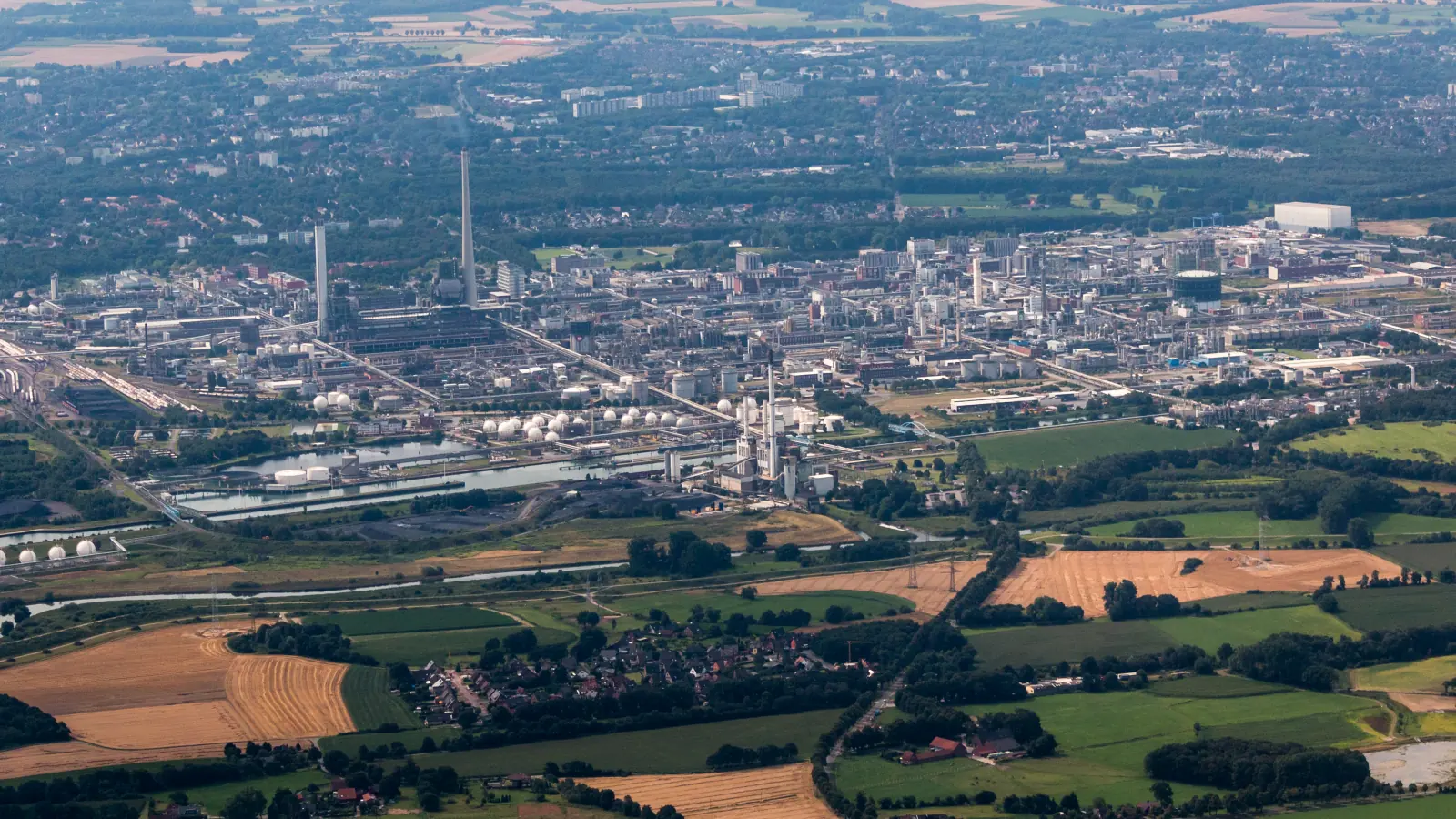

Where chemical processes run day and night, a solar plant on site is used in full, but it covers only part of the electricity, in daylight. Much of a chemical or pharmaceutical plant’s energy is steam and heat from gas, which a solar plant does not replace. The site’s backup stays as it is, and long-term power contracts can cover more of the rest.
In short
- Electricity is about 30% of the energy EU chemical plants use and 45% in pharmaceuticals; much of the rest is gas for steam and heat.
- A solar plant no larger than the steady demand is used in full and covers about a sixth to a fifth of the electricity.
- Check the hazardous areas, the backup, the grid connection, and what will cover the night and the steam.
How do chemical and pharmaceutical plants use energy?
As gas for steam and heat, and as electricity for machines, cooling and air handling. In the EU in 2024, electricity was 30% of the energy used to make chemicals and 45% in pharmaceuticals, where it was the largest source, according to Eurostat; natural gas was 38% and 39%. Gas and oil used as raw materials are counted apart.
In the United States in 2022, motors driving machinery took 54% of the electricity used in chemical plants, electrochemical processes such as making chlorine 10% and process cooling 8%. In pharmaceutical plants, heating, ventilation and air conditioning (HVAC) took the largest share, 30%, then motors 24% and process cooling 17%, by our calculation from the survey of manufacturers of the US Energy Information Administration (EIA).
In the United States, steam comes mostly from gas: chemical plants burned 56% of their natural gas in boilers in 2022, including combined heat and power (CHP) units that make power and steam together; pharmaceutical plants burned 51%, and another 27% of their gas went into HVAC. In Europe, energy weighs on costs: European gas prices are still three times those in the United States, says Cefic, the European chemical industry council (Facts and Figures 2025).
| Industry and place | Electricity | Natural gas |
|---|---|---|
| Chemicals, EU, 2024 | 30% | 38% |
| Chemicals, Spain, 2024 | 23% | 70% |
| Chemicals, Portugal, 2024 | 56% | 37% |
| Chemicals, Italy, 2024 | 41% | 27% |
| Chemicals, United States, 2022 | 13% | 65% |
| Pharmaceuticals, EU, 2024 | 45% | 39% |
| Pharmaceuticals, Spain, 2024 | 36% | 53% |
| Pharmaceuticals, United States, 2022 | 38% | 58% |
Neither source counts gas or oil used as raw material. The EIA counts power that plants make on site from fuel, for example in CHP units, as fuel, which lowers the US shares of electricity.
How much of a steady demand can a solar plant cover?
Where processes run continuously, demand stays high at night, and a solar plant no larger than that steady demand is used in full on site. Not every site runs that way: fine chemicals, including pharmaceutical products, are made mainly in batches in multipurpose plants, says the EU’s reference document for organic fine chemicals (2006), so their demand rises and falls with each batch. Size the plant to the lowest demand the site keeps day and night, which a year of quarter-hourly meter readings shows.
For a site drawing the same power around the clock, a plant on the ground with modules tilted at 30 degrees and facing south, near Madrid, Lisbon, Milan or Fresno in California, would have covered this in 2023, by our calculation from PVGIS, the EU Joint Research Centre’s solar data tool:
- 1 kWp (kilowatt peak, the plant’s rated power) for each kW of steady demand: 16% to 20% of the year’s electricity, all of the output used on site.
- 1.5 kWp per kW: 23% to 29%, with 2% to 4% of the output left over at midday.
- 2 kWp per kW: 27% to 33%, with 13% to 17% left over.
With electricity at 30% of a chemical plant’s energy, the EU figure for 2024, a plant of 1.5 kWp per kW covers about 7% to 9% of all the energy it uses, by our calculation. If the site runs a CHP unit, size the solar plant to the power it still buys.
What covers the night, and how can a site pay for the plant?
Long-term contracts. A power purchase agreement (PPA) with plants elsewhere, such as wind farms, can deliver power through the grid in hours the plant on site cannot, or settle the difference with the market price in a virtual PPA. What is a PPA? explains both. A battery adds little where the demand is steady and the plant no larger than it, as there is no surplus to store. For the plant on your own site, there are three ways to pay:
- Buy it, with your own funds or a loan, and keep the whole saving.
- Lease it, for a set instalment, often with maintenance included.
- Sign an on-site PPA, from 50 kWp: a financing partner pays for, owns and maintains the plant, and you pay only for its power, at a price per kWh set in the contract. That price starts below what you pay for grid power when you sign, and any yearly increase is written into the contract from the start.
Buying and leasing work at any size. Tax rules differ by country: see tax benefits of a solar PPA, and confirm them with your tax adviser.
Does a solar plant keep a process running in a power cut?
No. A plant connected to the grid switches off when the grid fails, for safety, as utilities such as Southern California Edison explain, and it produces nothing at night. Processes that cannot stop keep their uninterruptible power supply (UPS) and generators, and sensitive equipment stays on its UPS: a solar plant replaces neither.
A battery with equipment designed to run isolated from the grid can carry chosen loads for some hours, alongside that backup, never instead of it. If a battery is added to cut the bill, keep it apart from the backup, or agree in writing how much of it must stay in reserve.
Can a solar plant go on a site with hazardous areas?
Yes, outside the hazardous areas, or with equipment built for them. In the EU, the ATEX workplace directive, 1999/92/EC, requires the employer to classify places where explosive atmospheres may occur into zones, 0, 1 and 2 for gases, vapours and mists and 20, 21 and 22 for dust, and to record them in an explosion protection document. Equipment in each zone must be of the category it requires, as defined by the ATEX equipment directive, 2014/34/EU: category 1 in zones 0 and 20, category 1 or 2 in zones 1 and 21, and category 1, 2 or 3 in zones 2 and 22.
In the United States, the National Electrical Code (NFPA 70, 2026 edition, from the National Fire Protection Association) covers hazardous (classified) locations in Article 500, by class and division, with zone systems in Articles 505 and 506. Under the workplace rules of the Occupational Safety and Health Administration (OSHA), these areas must be documented, and equipment in them must be intrinsically safe, approved for the location or safe for it (29 CFR 1910.307). In practice:
- Start from the site’s area classification, and put modules, inverters, combiner boxes and cable routes outside classified areas: on warehouses, offices, car parks or spare land.
- Update the explosion protection document before work starts. In the EU, it must be revised when the workplace or work equipment undergoes significant changes, extensions or conversions (article 8 of Directive 1999/92/EC).
- Agree work permits, access and maintenance with the site’s safety team, and write them into the contract.
Can electricity replace some of the steam and heat?
In part, and only then can a solar plant help with heat. Heat pumps move heat instead of burning fuel: large ones can provide heat up to 140 to 160 °C today, and the paper, food and chemicals industries have the largest near-term opportunities, with nearly 30% of their combined heating needs within reach of heat pumps, according to the International Energy Agency (IEA, 2022). Heating air for HVAC, as in pharmaceutical plants, needs lower temperatures still.
Electric boilers are another route. US chemical plants used 14 trillion British thermal units (Btu) of electricity in boilers in 2022, against 1,440 trillion Btu of natural gas burned in boilers and CHP units, according to the EIA. Electrified heat raises the site’s power demand, so plan it with the grid connection and any long-term power contract.
Your market
Rules on self-consumption, exports and grants are set by each country, and in the United States by each state. Read the page for your market:
- Spain: autoconsumo en la industria química y farmacéutica, in Spanish.
- Portugal: commercial solar in Portugal, with the rules, the registration and what surplus earns.
- United States: commercial solar in the United States, with prices, export rules and tax, state by state.
- Colombia: commercial solar in Colombia, with the self-generation rules, surplus credits and tax incentives.
- Prices across Europe: business electricity prices in the EU in 2026.
How Aeternus helps
Aeternus Power is an independent energy company. We originate, qualify, structure and finance energy projects, solar-led and with storage: we study a year of your consumption and your site with your safety team, size the plant to the steady part of your demand, and bring in a vetted builder and the financing partner. We never own the plants. A commission is paid by whoever builds or finances the project, never by you, and only when the project goes ahead.
We work with businesses in Spain, Portugal and Colombia today; in Spain and Portugal you can buy the plant, lease it or, from 50 kWp, take a PPA. Our office in California opens on 1 December 2026, and we cannot yet say which of these we will arrange there. For a first figure, use the preview on our business page, or tell us about your site: we reply within two working days.
Questions
Can a chemical plant run on solar power?
Not from its own site alone. A solar plant produces only in daylight, and much of a chemical plant’s energy is steam and heat from gas. A plant on site covers part of the electricity, and long-term contracts with plants elsewhere can cover more.
Can a solar plant be installed in an ATEX zone?
Equipment in a zone must be of the category that zone requires under the EU’s ATEX directives, so the simplest plan keeps the plant and its cables outside classified areas. Start from your explosion protection document and agree every cable route with your safety team.
Will solar keep my process running in a power cut?
No. A plant connected to the grid switches off when the grid fails, for safety, and produces nothing at night. Your UPS and generators stay; a battery able to run isolated from the grid can carry chosen loads for some hours.
Can solar power produce process steam?
Only through electric equipment: an electric boiler, or a heat pump for heat at lower temperatures. The IEA says large heat pumps can deliver heat up to 140 to 160 °C today. In US chemical plants, most steam still came from gas-fired boilers and CHP units in 2022.
How much of a pharmaceutical plant’s electricity goes on air handling?
In US pharmaceutical plants, heating, ventilation and air conditioning took 30% of the electricity in 2022, more than any other use, by our calculation from EIA data. Motors took 24% and process cooling 17%.
Sources
- Eurostat: final energy consumption in industry, detailed statistics (data extracted May 2026): https://ec.europa.eu/eurostat/statistics-explained/index.php?title=Final_energy_consumption_in_industry_-_detailed_statistics
- Eurostat: industry energy consumption by NACE Rev. 2 activity, dataset nrg_d_indq_n (updated 27 August 2026): https://ec.europa.eu/eurostat/databrowser/view/nrg_d_indq_n/default/table?lang=en
- US Energy Information Administration: 2022 Manufacturing Energy Consumption Survey, tables 3.2 and 5.2, fuel consumption and end uses (2025 and 2026): https://www.eia.gov/consumption/manufacturing/data/2022/
- EUR-Lex: Directive 1999/92/EC on workers in explosive atmospheres, consolidated text of 27 June 2007, articles 7 and 8 and annexes I and II: https://eur-lex.europa.eu/legal-content/EN/TXT/?uri=CELEX:01999L0092-20070627
- EUR-Lex: Directive 2014/34/EU on equipment for potentially explosive atmospheres, consolidated text of 30 May 2026, annex I: https://eur-lex.europa.eu/legal-content/EN/TXT/?uri=CELEX:02014L0034-20260530
- NFPA: NFPA 70, National Electrical Code, 2026 edition, contents including Articles 500, 505 and 506: https://www.nfpa.org/en/product/nfpa-70-code/p0070code?l=70
- eCFR: 29 CFR 1910.307, hazardous (classified) locations (OSHA): https://www.ecfr.gov/current/title-29/subtitle-B/chapter-XVII/part-1910/subpart-S/subject-group-ECFR63ab49e215d9639/section-1910.307
- EU Joint Research Centre: best available techniques reference document for the manufacture of organic fine chemicals (2006): https://bureau-industrial-transformation.jrc.ec.europa.eu/index.php/reference/manufacture-organic-fine-chemicals
- International Energy Agency: The Future of Heat Pumps, executive summary (2022): https://www.iea.org/reports/the-future-of-heat-pumps/executive-summary
- Cefic: Facts and Figures of the European chemical industry 2025: https://cefic.org/facts-and-figures-of-the-european-chemical-industry/
- EU Joint Research Centre: PVGIS 5.3, hourly output of a solar plant (data for 2023): https://re.jrc.ec.europa.eu/pvg_tools/en/
- Southern California Edison: solar technology FAQs, outages and grid-tied systems: https://www.sce.com/customer-service-center/help-center/solar/getting-started-with-solar/solar-technology-faqs
Latest
Europe’s power prices in early November 2026: from €184/MWh in Spain to €347/MWh in Ireland