Solar for hotels, hospitals and universities: seasons, cooling peaks, hot water and backup
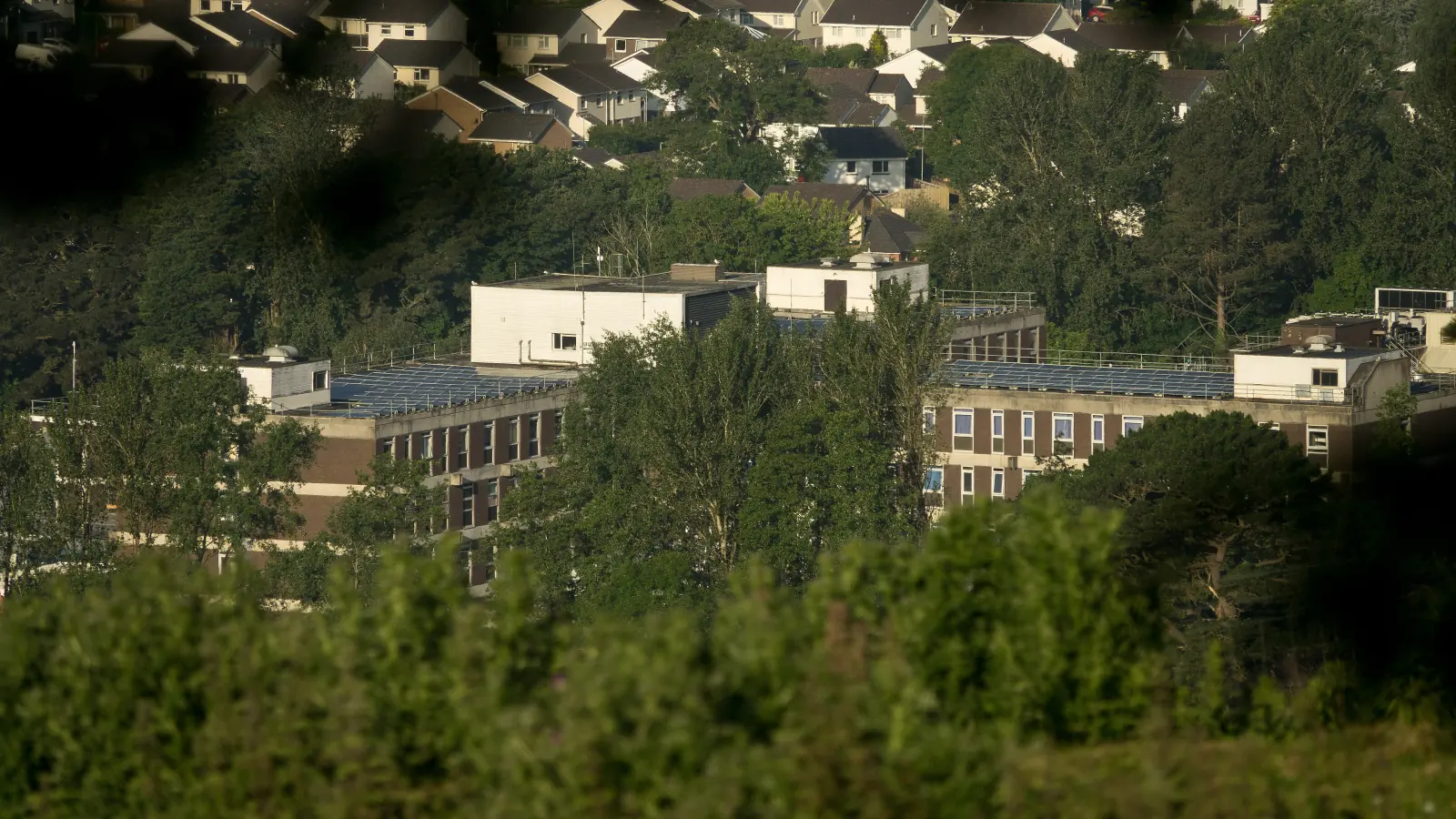

Hotels, hospitals and universities spend much of their electricity on cooling and ventilation, which work hardest on hot, sunny days, and hotels are busiest in the sunniest months. That suits a solar plant on their buildings or car parks. Hot water can move to heat pumps fed partly by the plant, but a hospital’s backup power must stay as it is.
In short
- Cooling and ventilation take over a third of the electricity used by US hotels, hospitals and schools, and work hardest on sunny days.
- A plant makes about two thirds of its yearly output from April to September, when EU hotels count most of their guest nights.
- Check the seasons, the hot water system, the backup the plant must leave in place and any public tender rules.
How do hotels, hospitals and universities use electricity?
Much of it goes on comfort. In US buildings in 2018, cooling and ventilation took 37% of the electricity used in lodging, such as hotels, 42% in hospitals and 35% in education buildings, against 32% across all commercial buildings, by our calculation from the US Energy Information Administration’s (EIA) survey of commercial buildings. Lighting took between 12% and 17%.
Hospitals run day and night and use the most per square metre: about 310 kWh a year, against about 140 kWh in hotels and 136 kWh in colleges and universities. Hotels follow their guests and the weather; universities are busiest in term-time working hours.
Hot water matters more in hotels: water heating took 19% of all the energy used in US lodging in 2018, against 5% across commercial buildings, and three quarters of that energy came from natural gas.
| Type of building | Electricity per m² a year | Cooling and ventilation | Lighting |
|---|---|---|---|
| Hospitals | 310 kWh | 42% | 12% |
| Lodging, including hotels | 155 kWh | 37% | 15% |
| Education, including universities | 101 kWh | 35% | 17% |
| All commercial buildings | 136 kWh | 32% | 17% |
Hospitals are inpatient health care buildings. Lodging also includes motels, dormitories and nursing homes, and education includes schools. The figures describe the United States.
When does a solar plant fit their year and their day?
Across the year, well. A plant near Madrid, Lisbon, Milan or Fresno in California produces between 63% and 69% of its yearly output from April to September, by our calculation from PVGIS, the EU Joint Research Centre’s solar data tool (modules tilted at 10 degrees, facing south, averages for 2005 to 2023). EU hotels are busiest in the same months: April to September carried 62.5% of the nights spent in EU hotels in 2025, 64.4% in Spain and 62.3% in Portugal, by our calculation from Eurostat data.
Within the day, less neatly. On hot days, cooling pushes demand up through the afternoon: across the United States, demand peaks around 17:00 or 18:00, according to the EIA. By then a plant has made most of its day’s output: in July 2023, between about 9% and 23% of the output of those four plants came after 17:00 local time, by our calculation from PVGIS. Cooling the building a little more in the early afternoon, or a battery, carries part of the midday output into that peak.
Closures shift the balance. A hotel that closes in winter loses little, as winter months produce the least: July output is 2.4 to 4.1 times December’s at those four places. A campus that empties in August loses use in a sunny month, so size its plant to the months of lower use, or plan what the surplus earns.
Can the plant heat the hot water?
Through a heat pump, yes. A heat pump water heater moves heat from the surrounding air into a tank instead of generating it, so it can be two to three times as efficient as a conventional electric water heater, according to the US Department of Energy. Heating the tank in the middle of the day uses the plant’s output and stores it as hot water for later.
It also replaces gas, which supplied three quarters of the energy for hot water in US lodging in 2018. Check the space for tanks, the temperatures your hot water system must reach and any hygiene rules that apply to your building.
Does a solar plant keep a hospital running in a power cut?
No. A plant connected to the grid switches off when the grid fails, for safety, and it produces nothing at night. A hospital’s critical loads stay on their own backup, which national rules require. In the United States, for example, federal rules for hospitals in Medicare require emergency and standby power systems, with generators placed, tested and maintained under the fire and safety codes NFPA 99, 101 and 110 (42 CFR 482.15). A solar plant reduces the power the hospital buys; it does not replace that backup.
A battery with equipment designed to run isolated from the grid can keep chosen loads running for some hours, such as a ward, a cold room or a server room, alongside the generators, never instead of them.
Where can the plant go on these sites?
On the buildings, over car parks and on spare land:
- On the buildings, if the structure can carry the extra weight and leaves room for plant rooms, helipads and access for maintenance and firefighting. Agree the design with your insurer.
- Over car parks, on canopies that add space and shade and can carry charging points for guests, patients and staff.
- On a campus, on several buildings or on spare land, feeding the buildings through the campus’s own network where it has one.
- On listed or protected buildings, only after an early talk with the planning authority.
In the EU, public buildings face deadlines. The Energy Performance of Buildings Directive (EU) 2024/1275 requires member states to ensure solar installations, where technically suitable and economically and functionally feasible, on new public buildings over 250 m² by 31 December 2026, and on existing ones over 2,000 m² by 31 December 2027, over 750 m² by 31 December 2028 and over 250 m² by 31 December 2030. National law sets the details.
How can a hotel, hospital or university pay for the plant?
There are three ways, and the plant can be the same in each:
- Buy it, with your own funds or a loan, and keep the whole saving.
- Lease it, for a set instalment, often with maintenance included.
- Sign a power purchase agreement (PPA), from 50 kWp (kilowatts peak, the plant’s rated power). A financing partner pays for, owns and maintains the plant, and you pay only for the power it supplies, at a price per kWh set in the contract. That price starts below what you pay for grid power when you sign, and any yearly increase is written into the contract from the start. A seasonal hotel should check how the contract treats the months it is closed, and any minimum purchase. What is a PPA? explains the contract.
Buying and leasing work at any size. Public hospitals and universities usually buy through a public tender, so ask early which of the three your procurement rules allow. As of 18 November 2026, the EU’s procurement rules are under review: the European Commission proposed on 9 September 2026 to replace the 2014 directives with a single regulation. Tax rules differ by country: see tax benefits of a solar PPA, and confirm them with your tax adviser.
Your market
Rules on self-consumption, exports and grants are set by each country, and in the United States by each state. Read the page for your market:
- Spain: autoconsumo en hoteles e instituciones, in Spanish.
- Portugal: commercial solar in Portugal, with the rules, the registration and what surplus earns.
- United States: commercial solar in the United States, with prices, export rules and tax, state by state.
- Colombia: commercial solar in Colombia, with the self-generation rules, surplus credits and tax incentives.
- Prices across Europe: business electricity prices in the EU in 2026.
How Aeternus helps
Aeternus Power is an independent energy company. We originate, qualify, structure and finance energy projects, solar-led and with storage: we study a year of your consumption, month by month, your buildings and your seasons, size the plant and any battery to them, and bring in a vetted builder and the financing partner. We never own the plants. A commission is paid by whoever builds or finances the project, never by you, and only when the project goes ahead.
We work with businesses in Spain, Portugal and Colombia today; in Spain and Portugal you can buy the plant, lease it or, from 50 kWp, take a PPA. Our office in California opens on 1 December 2026, and we cannot yet say which of these we will arrange there. For a first figure, use the preview on our business page, or tell us about your site: we reply within two working days.
Questions
Is solar worth it for a hotel?
Often, when the hotel is busiest in sunny months and uses air conditioning, because the plant produces most when the hotel uses most. Whether it pays depends on your power price, the building, the season and the way you pay. A year of hourly meter readings settles it for your hotel.
Can a hotel that closes in winter still use solar?
Yes. Winter months produce the least, so a seasonal hotel loses little of the plant’s output while closed. What it produces then goes to the grid, and each market pays for it in its own way, so check how a PPA treats those months.
Can solar replace a hospital’s backup generators?
No. A plant connected to the grid switches off in a power cut and produces nothing at night. Hospitals keep their generators and the backup their national rules require; a solar plant only reduces the power they buy.
Can one solar plant supply several buildings on a campus?
Often, where the buildings sit behind one connection on the campus’s own network: the plant then supplies whichever building is using power. Sharing between buildings with separate connections depends on each country’s rules.
Do public buildings in the EU have to install solar?
The Energy Performance of Buildings Directive requires member states to ensure solar installations on public buildings in steps from 2026 to 2030, where technically suitable and economically and functionally feasible. National law sets the criteria and the exemptions, so check yours.
Sources
- US Energy Information Administration: 2018 Commercial Buildings Energy Consumption Survey, tables C22, E1, E5 and E7, energy use by building activity and end use (December 2022): https://www.eia.gov/consumption/commercial/data/2018/index.php?view=consumption
- Eurostat: nights spent at tourist accommodation establishments, monthly data, dataset tour_occ_nim (updated 16 November 2026): https://ec.europa.eu/eurostat/databrowser/view/tour_occ_nim/default/table?lang=en
- eCFR: 42 CFR 482.15, emergency preparedness for hospitals, paragraph (e) on emergency and standby power systems (up to date as of 13 November 2026): https://www.ecfr.gov/current/title-42/chapter-IV/subchapter-G/part-482/subpart-B/section-482.15
- EUR-Lex: Directive (EU) 2024/1275 on the energy performance of buildings, article 10 on solar energy in buildings (24 April 2024): https://eur-lex.europa.eu/legal-content/EN/TXT/?uri=CELEX:32024L1275
- EUR-Lex: European Commission proposal for a regulation on public contracts and concessions, the Public Procurement Act, COM(2026) 590 (9 September 2026): https://eur-lex.europa.eu/legal-content/EN/TXT/?uri=CELEX:52026PC0590
- EU Joint Research Centre: PVGIS 5.3, hourly and monthly output of a solar plant (data for 2005 to 2023): https://re.jrc.ec.europa.eu/pvg_tools/en/
- US Energy Information Administration: hourly electricity consumption varies throughout the day and across seasons (21 February 2020): https://www.eia.gov/todayinenergy/detail.php?id=42915
- US Department of Energy, Building Science Education Solution Center: heat pump water heaters: https://bsesc.energy.gov/energy-basics/water-heaters-heat-pumps
- Southern California Edison: solar technology FAQs, outages and grid-tied systems: https://www.sce.com/customer-service-center/help-center/solar/getting-started-with-solar/solar-technology-faqs
Latest
Europe’s power prices in early November 2026: from €184/MWh in Spain to €347/MWh in Ireland