Croatia offers €30 million for solar plants and batteries on farms and in food processing, with applications until 31 January 2027
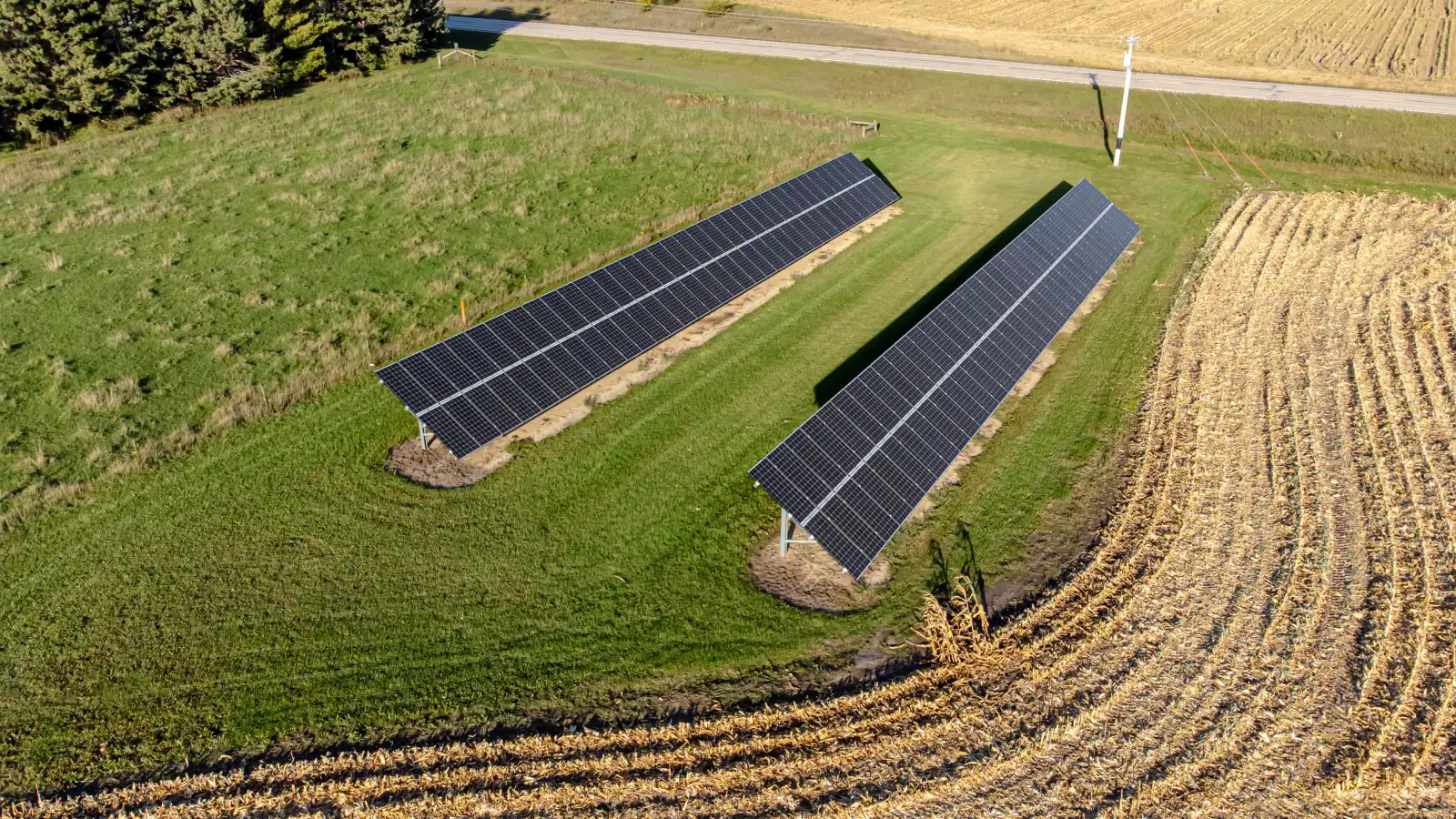

Croatia’s Ministry of Environmental Protection and Green Transition has opened a €30 million call for solar plants and batteries that farms, food processors and producer organisations use for their own power. Funded by the EU’s Modernisation Fund, it covers up to 65% of a solar plant’s eligible cost and up to 50% of a battery’s, with up to €5 million per applicant. Proposals go by registered post to the Environmental Protection and Energy Efficiency Fund (FZOEU) from 9 November 2026 until 12:00 on 31 January 2027, or until the money runs out.
What the call offers
The call, reference MF-2026-6-1, was published on 7 October 2026. Of its €30 million, €20 million is set aside for micro and small companies and €10 million for medium and large ones; money one group does not use can move to the other. A project can receive from €5,000 to €5 million, and €5 million is also the most one applicant can receive across all its proposals.
The grant covers a share of the eligible cost that depends on company size, as the EU defines it: micro means fewer than 10 staff, small fewer than 50 and medium fewer than 250, each with a ceiling on turnover or balance sheet. You pay the rest, plus VAT and any cost the call does not cover.
| Cost | Micro and small | Medium | Large |
|---|---|---|---|
| Solar plant, works supervision and project management | 65% | 55% | 45% |
| Battery | 50% | 40% | 30% |
Who can apply
Companies of any size can apply, including the self-employed and family businesses, if they belong to one of three groups. Each applies alone: partnerships are not eligible.
- Farmers in the Farm Register (Upisnik poljoprivrednika) who grow crops or raise livestock.
- Food processors registered for meat, fruit and vegetables, oils and fats, dairy, milling and starch, animal feed, wine, or cider and other fermented fruit drinks.
- Recognised producer organisations working in those activities.
Not eligible: applicants registered for these activities for less than a year before applying, those with a negative EBITDA in 2025 (or a loss, for those taxed on income), and those with blocked bank accounts.
What the project must meet
The plant must produce power for the site’s own use, and the call sets conditions that decide what you can build:
- Over a year, the plant must produce less than the site used in a reference period of 12 consecutive months since 2021, counting any plant already there.
- It must be connected to the grid, and each solar module must be at least 20% efficient.
- A battery is funded only together with a solar plant, sits behind the meter and must take at least 75% of its yearly charge from that plant.
- You must not apply for a guaranteed feed-in tariff for the plant until three years after the project ends.
- If you do not own the building or land, you need the right to use it for at least five years after the project ends.
- Work must not start before you post the proposal: a signed order or works contract counts as a start, while permits, studies and design work do not. The project can then take up to 24 months from the grant contract.
What is covered, and the cost caps
Eligible costs are building or extending the solar plant (modules, inverters, wiring, metering, monitoring, lightning protection and the grid connection), the battery, works supervision and project management. Costs count for a plant of up to one and a half times the site’s connection capacity for drawing power. Whether a battery pays off depends on what you use after sunset, as our battery guide explains for Spain.
| Item | Cap |
|---|---|
| Solar plant up to 1 MWp | €1,100 per kWp |
| Solar plant above 1 MWp | €890 per kWp |
| Battery | €750 per kWh |
| Works supervision | 1% of works and equipment |
| Project management, information and visibility | 1% of works and equipment |
Not covered: VAT, design documents, electric vehicle chargers, rooftop repairs, new carports, used equipment, land, leasing, maintenance, interest and the applicant’s own staff costs.
How to apply
Proposals go on a USB stick, by registered post with return receipt, in a sealed envelope to the Fund at Radnička cesta 80, 10000 Zagreb, marked MF-2026-6-1. The time the post office records counts as the time of receipt. Each proposal covers one site, everything must be in Croatian, and the main documents are:
- The application form and a bill of quantities with unit prices.
- The main design (glavni projekt), with the site’s energy and carbon dioxide balance, and the designer’s statement on the EU’s do no significant harm principle.
- Proof of ownership from the land register, or the owner’s consent.
- Financial statements for 2025 and a tax certificate no older than 30 days.
- Proof that your share is financed: a bank letter, a conditional loan decision or a statement of own funds.
- Photos of the site as it is today.
Questions go by email to the ministry, quoting MF-2026-6-1, up to 14 days before the deadline. It publishes answers but will not say in advance whether a given project qualifies.
Who decides, and when
A committee of the Fund and the Ministry checks each proposal against the call’s conditions and reports within 90 days of receiving it; the minister then decides. Grants are awarded until the money runs out, and if it falls short the next applicant in order of receipt is contacted. A proposal that has to be completed takes the date of its completion. Applicants can object within eight days of the ministry’s notice.
No grant is assured: the call itself says that posting a proposal does not guarantee funding. If you are awarded one, you sign a contract with the Ministry and the Fund and must show a loan contract or own funds of at least 30% of the project’s value. You can ask for an advance of up to 20% of the grant against a bank guarantee.
Practical steps before you post
As of 17 November 2026, the Fund’s page showed no notice of early closure, but the call closes as soon as the money runs out. In practice:
- Check the basics: at least a year in an eligible activity, a positive EBITDA or no loss in 2025, and no blocked accounts.
- Pull 12 consecutive months of consumption from your meters and size the plant below it.
- Brief a designer early: the main design, the energy balance and the do no significant harm statement take the longest.
- Line up your share now, with a bank letter or proof of own funds.
- Do not sign an order or a works contract until the proposal is in the post.
- Send a complete proposal as early as you can.
How Aeternus helps
Aeternus Power is an independent energy company based in Madrid. We originate, qualify, structure and finance energy projects, solar-led and often with storage, with vetted builders and financing partners. We are expanding into the Balkans, with talks under way in Serbia and Croatia with financing partners, builders and buyers for the power.
If you run a farm or food business in Croatia, contact us with a year of bills: we can tell you what a plant and a battery could cover. The ministry decides every grant, and nobody can promise one. We never own plants: the builder or financing partner pays us a commission, never you, and only if a project goes ahead. Our business page shows how we work in Spain and Portugal.
Questions
Who can apply for Croatia’s €30 million solar grant for agriculture?
Companies of any size in farming, registered food processors in activities such as meat, dairy, fruit and vegetables, oils, milling, animal feed and wine, and recognised producer organisations. Each must have been registered for the activity for at least a year.
How much of a solar plant does the Croatian grant cover?
Up to 65% of eligible costs for micro and small companies, 55% for medium and 45% for large ones; for a battery, 50%, 40% and 30%. Eligible costs are capped at €1,100 per kWp up to 1 MWp, €890 per kWp above that and €750 per kWh of battery.
When is the deadline for the Croatian agriculture solar call?
12:00 on 31 January 2027, or earlier if the €30 million runs out. Proposals have been accepted since 10:00 on 9 November 2026.
Can I start building before the grant is decided?
Not before you post the proposal, or the project becomes ineligible. After that you may start at your own risk, because posting a proposal does not guarantee a grant.
Can a battery be funded on its own?
No. A battery is eligible only with a solar plant in the same project, behind the meter, and it must take at least 75% of its yearly charge from that plant.
Sources
- Ministry of Environmental Protection and Green Transition: call MF-2026-6-1, use of renewable energy in primary agricultural production and the processing of agricultural products, full text (7 October 2026, in Croatian, PDF): https://www.fzoeu.hr/docs/274/Poziv%20MF-2026-6-1%20FNE%20Poljoprivreda.pdf
- Environmental Protection and Energy Efficiency Fund (FZOEU): call MF-2026-6-1, summary, forms and annexes (in Croatian): https://www.fzoeu.hr/hr/natjecaj/7539?nid=274
- Ministry of Environmental Protection and Green Transition: the Modernisation Fund in Croatia (in Croatian): https://mzozt.gov.hr/o-ministarstvu-1065/djelokrug/uprava-za-klimatske-aktivnosti-1879/modernizacijski-fond/9095
- European Commission: SME definition, staff, turnover and balance sheet ceilings: https://single-market-economy.ec.europa.eu/smes/sme-fundamentals/sme-definition_en
- Modernisation Fund: the EU programme for energy investment in 13 member states: https://www.modernisationfund.eu/
- Balkan Green Energy News (11 November 2026): Croatia offers EUR 30 million for solar, batteries in agriculture: https://balkangreenenergynews.com/croatia-offers-eur-30-million-for-solar-batteries-in-agriculture/
- Kronike Velike Gorice (10 October 2026): €30 million for solar plants in agriculture, applications from November (in Croatian): https://www.kronikevg.com/za-solarne-elektrane-u-poljoprivredi-osigurano-30-milijuna-eura-prijave-pocinju-u-studenome/
Latest
Europe’s power prices in early November 2026: from €184/MWh in Spain to €347/MWh in Ireland